

In the dynamic landscape of the insurance industry, one might wonder why insurers seem to be engaged in a guessing game. As risk factors evolve, customer expectations shift, and global uncertainties persist, insurers find themselves grappling with challenges that require them to make informed decisions. Too many insurers claim to deploy modern, cutting-edge technology solutions yet their systems are built to process actions without using the valuable insights that can improve the user experience.
One of the key factors contributing to the perceived guessing game is the complexity of risk assessment. Insurers operate in an environment where risks are multifaceted and continually changing. From natural disasters and economic fluctuations to emerging technologies and evolving customer behaviours, insurers must navigate a myriad of variables to accurately assess and underwrite risks.
The guesswork is left to the staff using the system, who often make their own subjective decisions as the system provides no insight, despite the volumes of data available to it.
The question that needs to be asked at the start of a system design is whether those setting up the processes are equipped with the skills needed to ensure that the system “learns” from the current customer journey and is capable of learning from the process afterwards. In most cases, they are not! As a result, the process is not as efficient and effective as it should be.
It is not always obvious to those setting up these systems that a clear differentiation needs to be made between the “actions” part of the machine and the “brains”. There is a difference between just “doing” and “processing, learning improving”.
The challenge faced by decision-makers tasked with implementing machine learning in their processes is identifying developers who can do two things –build a process and enable it to evolve. Many smart developers are great at creating task and goal-orientated processes, but developers who create systems to analyse, observe and optimise have a completely different skill set – this requires a fusion of data science and technology.
For optimum productivity, data will be fed into a decision engine, models will be developed, and algorithms will run, whilst simultaneously feeding back fresh insight into the system, suggesting real-time changes to the use experience such as new product offerings, personalised incentives, useful marketing messages and improved claims handling.
If systems lack inbuilt data science capabilities, insurers will need to bring in external resources to analyse the data, often using (delayed) offline processes and with higher human costs and biases.
This can compromise the customer journey and reduce efficiency. Sales will be lost due to inappropriate focus, claims will be mismanaged due to routing delays and lapse rates increase due to inefficient retention strategies. The actual cost to the insurer ends up being much higher.
Decision makers who recognise the need to design systems to learn will shorten the insight loop by appreciating the value that real-time business intelligence can add. They benefit from thinking systems as opposed to processing systems. Furthermore, insurers are increasingly integrating data analytics and machine learning into their operations to enhance risk assessment. While these technologies hold great promise, their deployment is not without its challenges.
In the ever-evolving landscape of the insurance industry, the perception that insurers are playing a guessing game is rooted in the inherent complexities they face. To be competitive, insurers should be asking how smart their systems are, and whether their processes learn and improve over time. If the answer is “not really”, the guessing game will continue.

Optalitix Partners with H.W. Kaufman Group to Digitise and Scale London Market Underwriting
New API-driven platform enables Burns & Wilcox to integrate London Market capacity into a unified quoting workflow, accelerating speed, scale, and efficiency

Upcoming Events for April and May
In London, Barcelona and USA
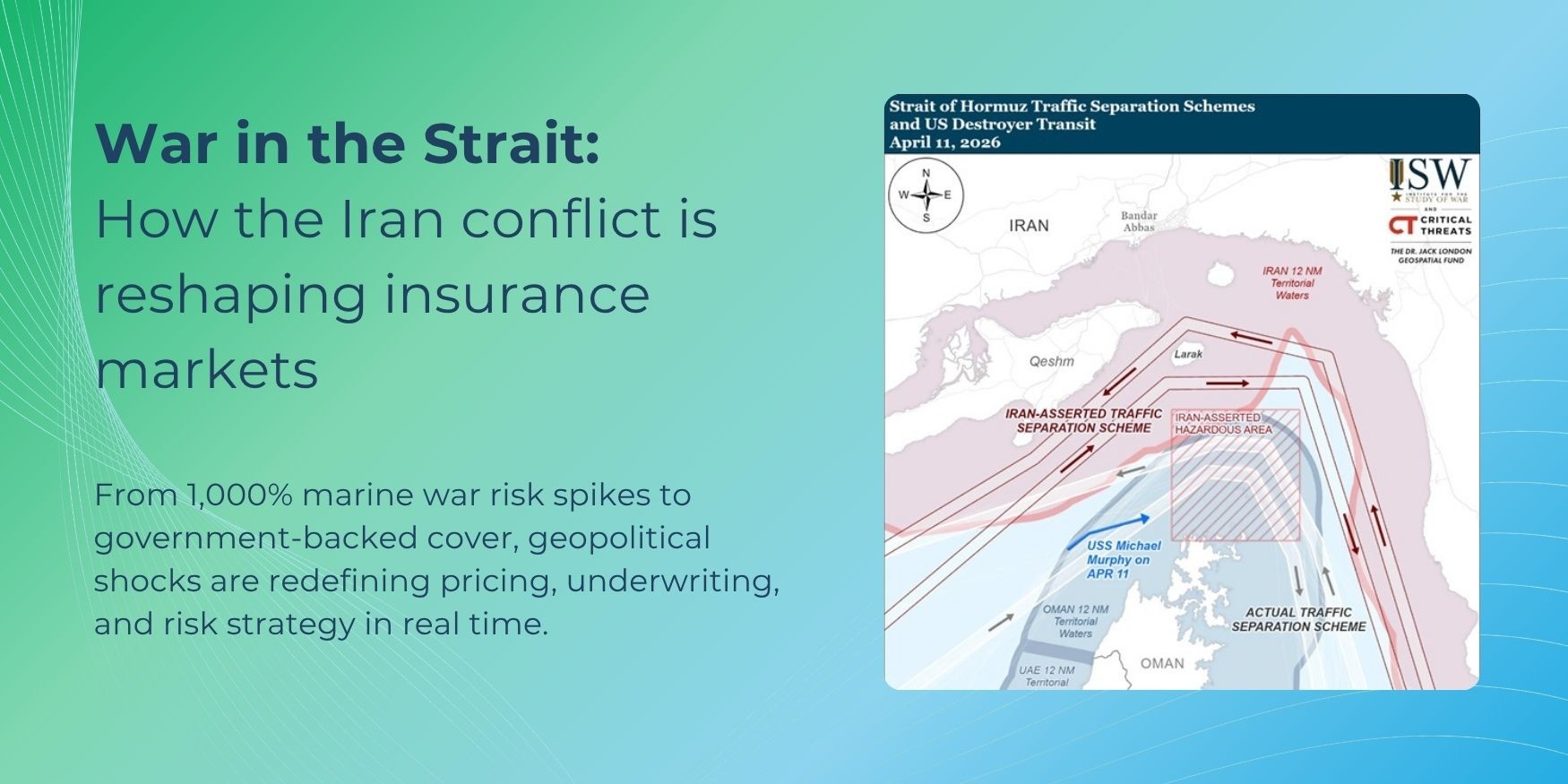
War in the Strait: How the Iran Conflict Is Reshaping Insurance Markets
From 1,000% marine war risk spikes to government-backed cover, geopolitical shocks are redefining pricing, underwriting, and risk strategy in real time.

What’s Going On? Reality check: AI and pricing in production
AI in insurance is no longer about potential, it’s about what’s already working
Embrace Change, Don’t Fear It
From the CTO's Desk: Agility Is a Strategic Imperative
Modern Pricing: The Competitive Edge Insurers Can No Longer Ignore
How advanced analytics and dynamic pricing are reshaping underwriting, profitability, and competitive positioning in insurance

Explore Cutting-Edge Pricing and Underwriting Technology at ITI
Visit Optalitix at stand B23

Optalitix Partners with Intermont to Power Digital Underwriting in the Netherlands
Strategic partnership with Dutch MGA Intermont modernises pricing and underwriting operations and establishes a flagship Optalitix use case in the Dutch market.

Supply-demand fundamentals favour buyers during 1/1 renewals
With capital at record levels and demand lagging, cedents are pushing for meaningful pricing reductions and fewer exclusions; reinsurers are selectively flexible, but intent on protecting portfolio quality.

Reflecting on 2025: A Year of Growth, Innovation, and Industry Recognition at Optalitix
Celebrating Client Success, Key Milestones, and Looking Ahead to 2026
GIRO 2025: Key Takeaways
What’s changing in general insurance: AI, pricing sophistication, capital validation, reserving evolution, and climate risk
Significant market changes as reinsurers prepare for the renewal season
After 3 years of market hardening, moderating catastrophe losses and rising reinsurance capital are reshaping renewal dynamics heading into 2026
Data, Speed, and Insight: The Future of Reinsurance Risk Pricing
Harnessing modern analytics and cloud technology to transform actuarial decision-making and strengthen portfolio performance

Autumn Update 2025: Innovation, Renewal, and Market Momentum
Your guide to the latest renewal trends, pricing insights, and standout client success stories

Listening to the Market: Why Understanding Our Clients Is Our Greatest Innovation
The Power of Listening: Too often, technology companies build first and listen later