
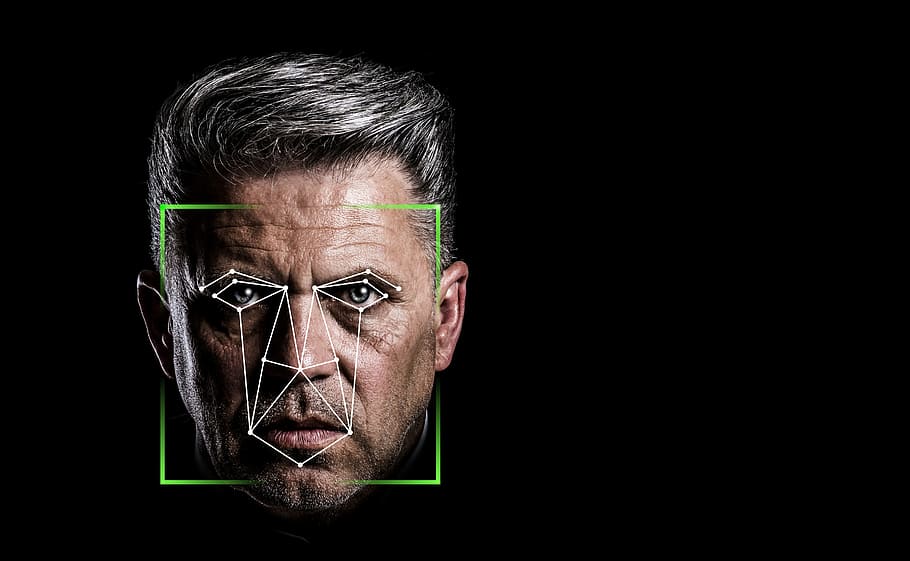
The debate over racial bias in tech has been renewed as a university in America claims it can “predict criminality” through facial recognition.
Researchers at Harrisburg University claim that they can “predict if someone is a criminal based solely on a picture of their face” through software “intended to help law enforcement prevent crime”.
One member from the Harrisburg research team in particular claimed that “Identifying the criminality of [a] person from their facial image will enable a significant advantage for law-enforcement agencies and other intelligence agencies to prevent crime from occurring.”
The university have said that this research would be included in a Springer Nature book, however, Springer have stated that this was “at no time” accepted, claiming that the research “went through a thorough peer preview process. The series editor’s decision to reject the final paper was made on Tuesday 16 June and was officially communicated to the authors on Monday 22 June”
Whilst the Harrisburg researchers claim their technology holds “no racial bias” through its operations, there has still been considerable backlash from this research - 1,700 academics signing an open letter demanding this research stays unpublished.
The Coalition for Critical Technology, and organisers of this open letter, have stated that “Such claims are based on unsound scientific premises, research, and methods, which numerous studies spanning our respective disciplines have debunked over the years.” and that “all publishers must refrain from publishing similar studies in the future”.
The group have raised attention to the distorted data that feeds this perception of what a criminal “looks like”, pointing to a number of studies that suggests harsher treatment for ethnic minorities throughout the criminal justice system.
Computer-science researcher at Cambridge University Krittika D’Silva commented: “It is irresponsible for anyone to think they can predict criminality based solely on a picture of a person’s face.”
“The implications of this are that crime ‘prediction’ software can do serious harm – and it is important that researchers and policymakers take these issues seriously”
D’Silva also points to the number of studies revealing machine-learning to hold various different biases “Numerous studies have shown that machine-learning algorithms, in particular face-recognition software, have racial, gendered, and age biases”
Harrisburg University have decided not to publish this paper on the facial recognition software, stating the news release that outlined the research, titled “A Deep Neural Network Model to Predict Criminality Using Image Processing” has been removed at the involved faculty’s request, and further that publication the research was going to appear in has since decided against this. The university state on their website:
“Academic freedom is a universally acknowledged principle that has contributed to many of the world’s most profound discoveries. This University supports the right and responsibility of university faculty to conduct research and engage in intellectual discourse, including those ideas that can be viewed from different ethical perspectives. All research conducted at the University does not necessarily reflect the views and goals of the University.”

Optalitix are Insurance Times Awards Gold Winner - Release
Optalitix wins the Gold award for Excellence in Technology – Service Provider (General) category at the 2021 prestigious Insurance Times Awards. Read more here.

The role of an underwriter should not be underestimated
The multi-faceted contribution an underwriter makes to any insurance business transcends simply assessing risk. Read more about underwriting and the impact of it.
Changes to FCA Insurance Pricing
New rules from 2022 ensure customers who are renewing their insurance policies receive a quote no more than they would be quoted as a new customer. Read more.
The future of systems with embedded Excel models
The ease with which Excel models can now be converted and the number available requires a new age of system design. Find out more in this guide.
Convert pricing models using an Excel converter.
Optalitix have determined that using Excel converters to convert pricing models is the most efficient and effective method. Take a look at the features and more.
Converting Spreadsheets - The 3 Options
At Optalitix, we are able to convert spreadsheets in 3 ways: by recoding the system, using an existing commercial platform, or using an Excel converter.
Spreadsheet models need to go digital
Spreadsheets should move to cloud-based systems in order to benefit from rich features such as dashboards, databases and seamlessly integrated AI and automation.
Spreadsheet dependancy and pricing
Spreadsheets are frequently used for pricing due to their ability to build complex calculations quickly in a flexible coding environment. Read our guide now.
Optalitix powered United Trust Bank’s step into the future with instant mortgage decisioning
The mortgage market is always changing. Few banks are able to offer an instant decision on a mortgage, yet the United Trust Bank (UTB) is one of them. Read more.
Five reasons why pricing in the cloud will increase sales
Cloud based pricing ensures that everything from conversion to compliance is streamlined, efficient and controlled ultimately leading to increased sales.
Spreadsheet Sense Check
As business strategy evolves and growth is more dependent on cloud based tools like AI, machine learning and data, the value of spreadsheets might be affected.

Big Data Processing for Multiple Insurers
The insurance sector is data rich and decisions are made quickly using real time data. Find out how GoCompare embraced AI to add value to their partner offering.
Learn about Lloyd’s Lab – an influential insurtech accelerator
Membership in Lloyd's Lab allowed Optalitix to scale up and develop innovative ideas in collaboration with the world's largest insurance market. Learn more now.
Learn about Mass Challenge – a US based start-up accelerator
