
Create a claims forecasting system
Calculating claims is vital for insurers as it can take months or even years for the claim payments after an insurance event to emerge. Learn more now.

Why read this use case?
- Is reserving for insurance claims important for your business?
- Is the calculation process a challenging exercise due to the use of spreadsheets?
- Do you want your models hosted on a system and auditable?
If the answer is yes, the article below and our interactive example will be valuable to you.
Summary
Calculating claims is vital for insurers as it can take months or even years for the claim payments after an insurance event to emerge. For example, healthcare claims can take 12 months to be fully paid, while motor claims for bodily injury claims can take longer, sometimes 3-4 years due to legal processes. Insurers are required to hold cash for these emerging claims in their reserves. The claims forecast is very important as it drives insurer profitability, capital required and pricing for future new policies.Many insurers use claims triangle to predict future claims. These are often done on spreadsheet using the chain ladder method. These calculations are not properly tracked, and the templates used are often inconsistent and sometimes have errors.Optalitix Models helps to resolve these issues by allowing actuaries to convert the claims reserving template into a trackable system, with full insight into any calculations using their models, and with the ability to update the template and be sure that all users are using the latest version.
Benefits to users
- Results are stored, making it easy to audit and access the claim calculations.
- The models are scalable across the business.
- Different versions of the template can be provided with usage and updates tracked.
- Fewer reserving errors due to consistent templates and storing of all calculations.
- Calculation can be done more efficiently, with online input by data analysts and checking by actuaries.
- The same models can be applied in multiple areas of the business - e.g. finance, actuarial, underwriting, pricing.
Example
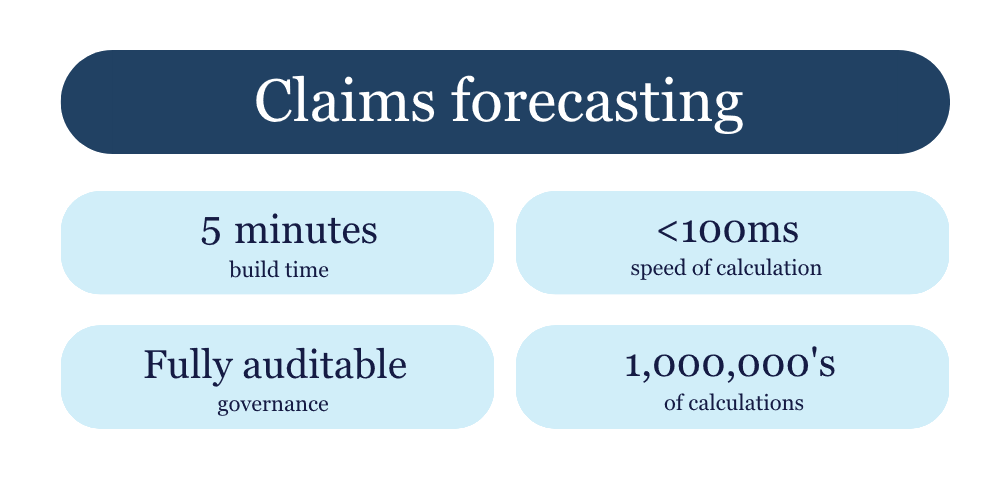
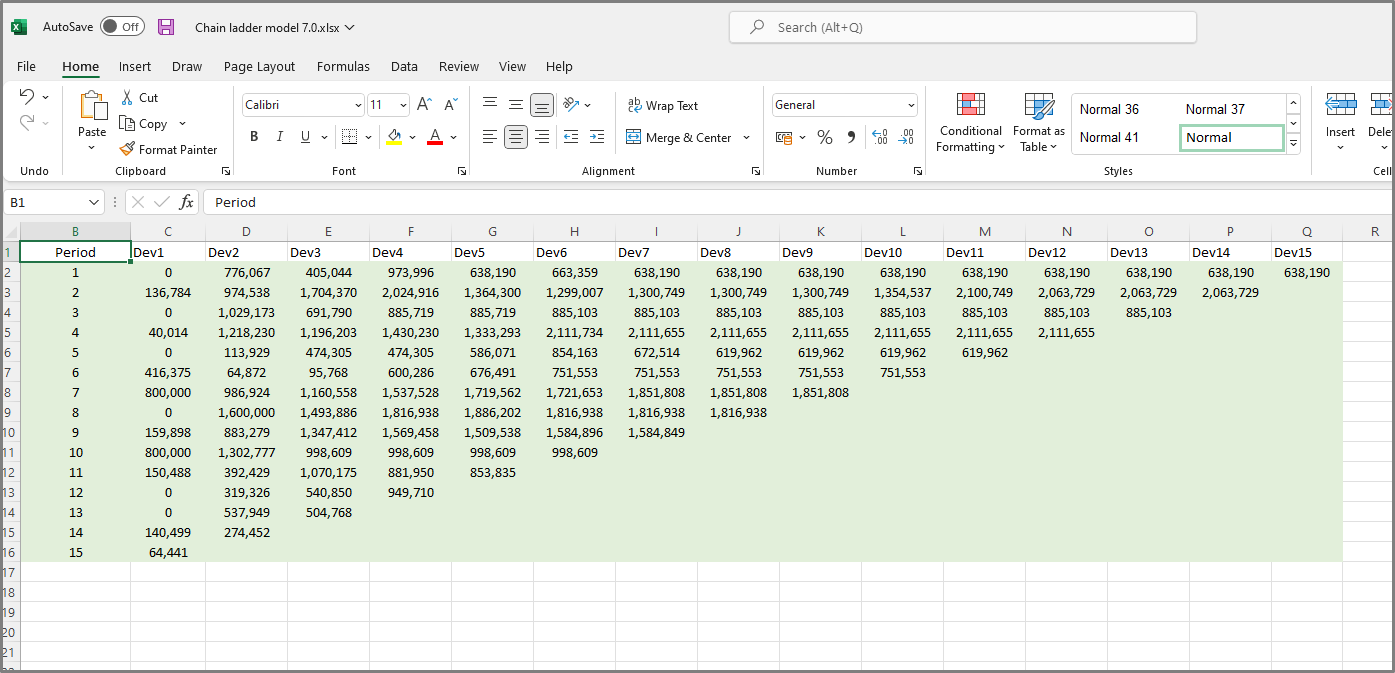
We have created an online model to demonstrate a claims reserving calculation. It took us 5 minutes to convert the spreadsheet to a cloud hosted system in Optalitix Models.The model is based on a spreadsheet that projects expected future claims based on past payment patterns from a claims triangle (see picture below). This model uses the chain ladder claims forecasting method, although any other methods can be built into the spreadsheet and used, e.g. the Bornhuetter Ferguson and Bootstrap method can also be created.You can test it out by pasting your claims triangle with up to 15 development periods into the table below.
Try it out for yourself
Paste your claims triangle into the table below, with the period that the claim was incurred as your row and the cumulative amount paid by development period as your column.You can use our sample claims triangle inputs or use your own claims triangle to test it for yourself.{{CODEModelsWidgetClaimsTriangle}}
More insights

Reinsurance’s Capital Tsunami: Is It Too Much of a Good Thing?
Record capital and falling rates are reshaping reinsurance. What happens when today’s soft market reaches profitability?

What Every CEO Should Know About AI: Who AI Is Actually For?
Part 2 of 4: Why successful AI in underwriting starts with involving the people who use it.

The human side of AI-powered pricing
Why insurers no longer need to choose between Excel, Python, R and modern pricing systems and how connected underwriting platforms are making AI a practical reality.