

Breaking down what you need to know about algorithmic underwriting and smart follow syndicates
We are excited by the emergence of the technology for algorithmic underwriting as a new method of insuring risks in the London market. This report considers the impact on Lloyd’s and the London Market where complex risks are typically underwritten. We will focus on automatic follow underwriting (called smart follow) and automatic lead underwriting (called smart lead) which these algorithms drive, as well as the technology that sits behind it. This is an important emerging market for insurance with recent start-ups such as Ki (part of Brit), Vave (part of Canopius) and Smart Tracker (part of Beazley) being prime examples of this process operating for both smart follow and smart lead solutions, having raised hundreds of millions of pounds to get going. The growth in interest in algorithmic underwriting is understandable given the need for a reduced cost of writing business in the London Market, compounded by the drive to become more digital.
Smart follow and smart lead
Smart follow underwriting uses algorithms to determine which risks to “follow”, i.e. insure a proportion of the risk, based on a set of algorithms using historical data on the underwriter leading their risk, and the type of risk involved. It is by far the most common type of algorithmic underwriting in the London Market at the moment.
Smart lead underwriters use algorithms to price risk, with limited underwriter involvement. While common in retail classes like motor and home, this is rare in the Lloyd’s market due to the complexity of specialty risks which makes it hard to price accurately. Our report focuses on the smart follow market.
Algorithmic underwriting will drive changes in the market, as more smart follow underwriters emerge, there will be a change in the process of underwriting risk, with the best lead underwriters carrying significant auto-follow capacity, making them attractive options for brokers to place business with. We expect there will be continued growth in follow-only syndicates as the reduced costs and potential to achieve above-average returns attract capital to the market. There are significant advantages to all participants in the smart follow, algorithmically driven ecosystem:
- Smart follow syndicates get to write more business that is priced by the best lead underwriters in the market, generating better profits and increasing their business exposure.
- Lead underwriters gain by having additional capacity and improved pricing credibility linked to the number of smart follow syndicates that follow them, making them more attractive to brokers looking for a quicker bind process.
- Brokers gain by reducing the amount of work required to achieve the cover needed for each risk as automatic capacity is provided by the smart follow syndicates.
The emergence of risk exchanges could also fuel the growth in smart follow syndicates. These exchanges will provide a source of large volumes of priced risks that can then be selected by smart follow syndicates to expand and diversify their portfolio.
Benefits of smart follow algorithmic underwriting.
Algorithmic underwriting is a new way of writing insurance business that is proving popular for Lloyd’s syndicates. It offers benefits to all the parties in the process:
high-volume.
Benefits to insurers using smart follow underwriting
- Increased levels of business by accessing high volume quotes across the market at low cost.
- Reduces syndicates' overall capital requirements by optimising portfolio risks.
- Improved risk profits by accessing premiums provided by the best underwriters in the London Market.
- Expands syndicates risk knowledge into new areas using expert underwriters as a guide.
- Access emerging new insurance exchanges that provide capacity to the market.
Benefits to lead underwriters
- Expands capacity for lead underwriters, making them more attractive for brokers to lead risks.
- Provides credibility for lead underwriters who are chosen based on their experience and capabilities.
Benefits to brokers
- Reduces the number of follow underwriters required, speeding up time to bind the risk and reducing costs.
Smart follow underwriting will become the market standard
The economic value of the smart follow model and profits from existing follow only syndicates together with the drive to digitize Lloyd’s will cause the smart follow syndicate to grow significantly in capacity provided. Capital providers view these strategies as an attractive way to deploy capital, and while the risk experience of the existing smart follow syndicates is still new, it is looking positive with Smart Tracker generating profits in 2021. Future risk outcomes for these syndicates will be closely followed by the rest of the market and we expect more smart follow syndicates to be set up. For brokers, the attractiveness of having large capacity provided by auto-follow syndicates for their lead underwriter will grow. The recognition of the lead underwriter’s expertise and the potential for greater capacity will make lead syndicates with high auto-follow capacity attractive to brokers. Conversely, lead underwriters with fewer syndicates choosing to provide auto-follow capacity (possibly due to adverse performance or lack of experience in a line of business) will become less attractive for brokers to approach due to the difficulty of convincing other underwriters to follow the lead underwriter’s pricing. This will result in the best lead underwriters being able to dictate terms, and potentially increase charges for the following syndicates. Lead underwriters will work to attract smart follow syndicates, and to boost their reputation in the market to increase the automatic capacity they attract with any business they price. As this market grows, and capital flows into the market, expect these smart follow syndicates to grow significantly, and for the best lead syndicates to boost their pricing expertise to attract them while worse performing lead underwriters will struggle to attract broker attention and lose market share. This Darwinian process of superior pricing driving additional business will become the future of the London market. Look out next week for our in-depth analysis on how it all works.

Optalitix Partners with H.W. Kaufman Group to Digitise and Scale London Market Underwriting
New API-driven platform enables Burns & Wilcox to integrate London Market capacity into a unified quoting workflow, accelerating speed, scale, and efficiency

Upcoming Events for April and May
In London, Barcelona and USA
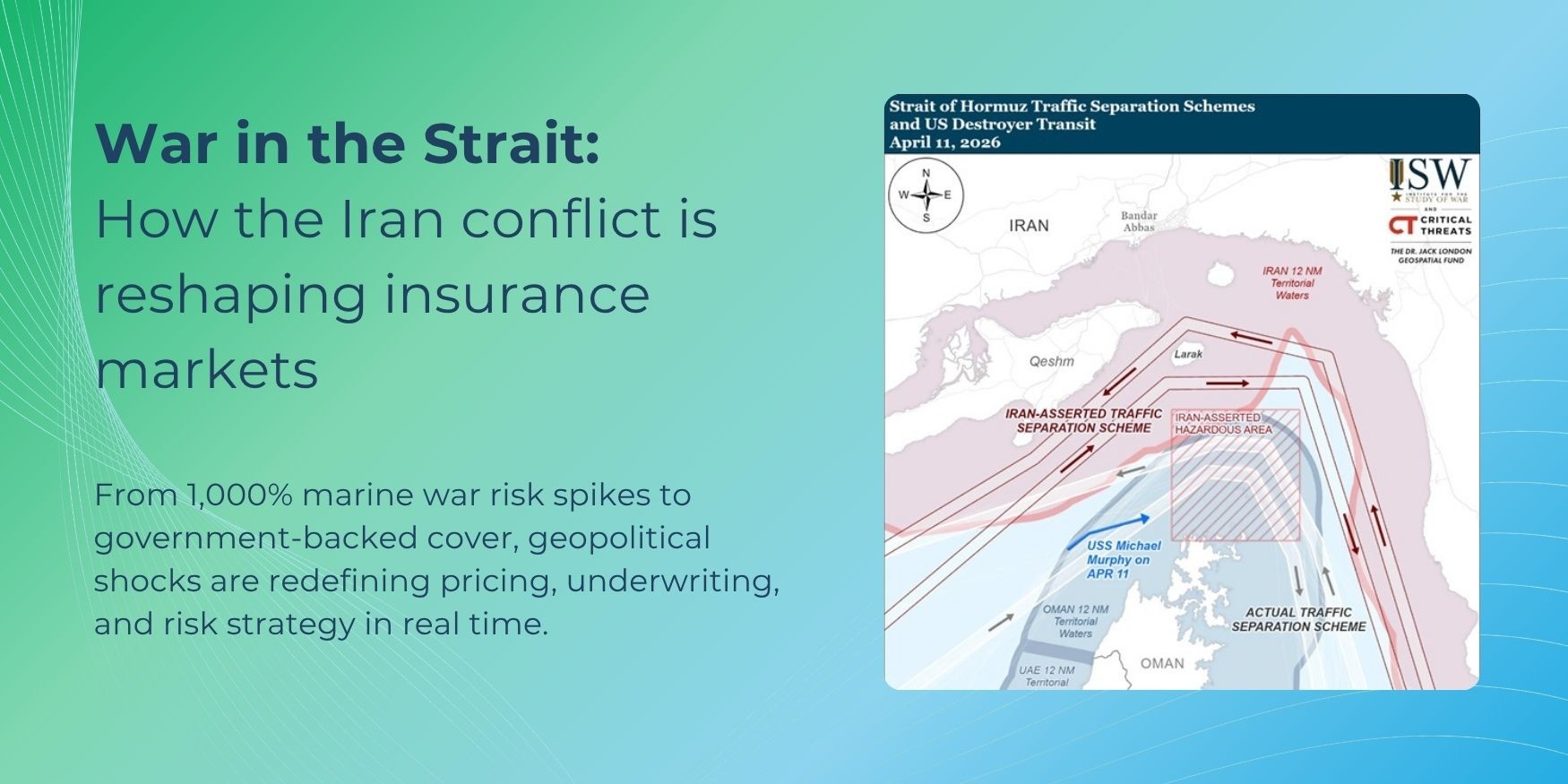
War in the Strait: How the Iran Conflict Is Reshaping Insurance Markets
From 1,000% marine war risk spikes to government-backed cover, geopolitical shocks are redefining pricing, underwriting, and risk strategy in real time.

What’s Going On? Reality check: AI and pricing in production
AI in insurance is no longer about potential, it’s about what’s already working

Embrace Change, Don’t Fear It
From the CTO's Desk: Agility Is a Strategic Imperative

Modern Pricing: The Competitive Edge Insurers Can No Longer Ignore
How advanced analytics and dynamic pricing are reshaping underwriting, profitability, and competitive positioning in insurance
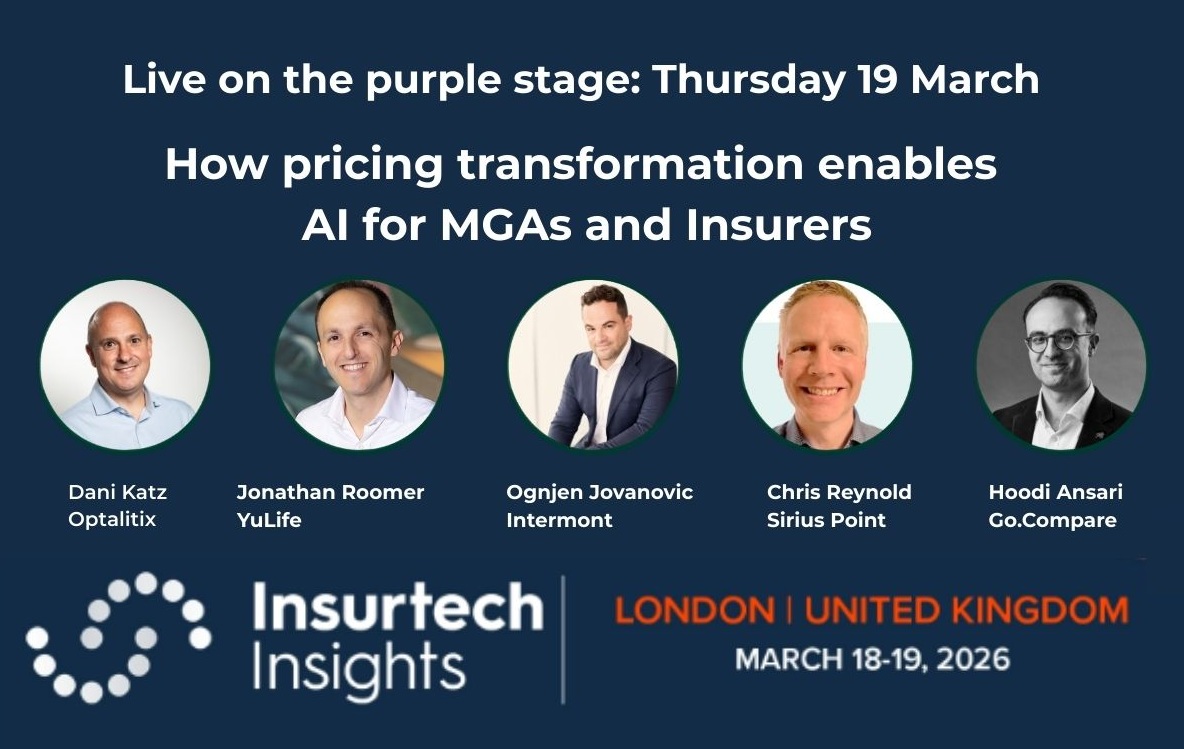
Explore Cutting-Edge Pricing and Underwriting Technology at ITI
Visit Optalitix at stand B23

Optalitix Partners with Intermont to Power Digital Underwriting in the Netherlands
Strategic partnership with Dutch MGA Intermont modernises pricing and underwriting operations and establishes a flagship Optalitix use case in the Dutch market.
Supply-demand fundamentals favour buyers during 1/1 renewals
With capital at record levels and demand lagging, cedents are pushing for meaningful pricing reductions and fewer exclusions; reinsurers are selectively flexible, but intent on protecting portfolio quality.

Reflecting on 2025: A Year of Growth, Innovation, and Industry Recognition at Optalitix
Celebrating Client Success, Key Milestones, and Looking Ahead to 2026
GIRO 2025: Key Takeaways
What’s changing in general insurance: AI, pricing sophistication, capital validation, reserving evolution, and climate risk

Significant market changes as reinsurers prepare for the renewal season
After 3 years of market hardening, moderating catastrophe losses and rising reinsurance capital are reshaping renewal dynamics heading into 2026

Data, Speed, and Insight: The Future of Reinsurance Risk Pricing
Harnessing modern analytics and cloud technology to transform actuarial decision-making and strengthen portfolio performance

Autumn Update 2025: Innovation, Renewal, and Market Momentum
Your guide to the latest renewal trends, pricing insights, and standout client success stories

Listening to the Market: Why Understanding Our Clients Is Our Greatest Innovation
The Power of Listening: Too often, technology companies build first and listen later