

The Artificial intelligence tool Generative Pre-training Transformer (GPT-3) has gained much attention recently, renowned for its impressive abilities in prescribing medication, designing websites and answering questions.
GPT-3 is the third generation of a machine learning model, automatically learning from its experiences without the need for programming. This tool has been developed by the artificial intelligence research lab OpenAI, comprised of its for-profit OpenAI LP corporation and its non-profit OpenAI Inc parent organisation.
Amongst its array of impressive qualities, GPT-3 is also causing quite a stir after its GPT-2 predecessor was dubbed “too dangerous to release” – claimed to create text indistinguishable from that written by humans.
What Can GPT-3 Do?
Currently, GPT-3 is closed-access, its abilities being demonstrated and shared via social media - the likes of Sharif Shameem showing how the AI can be used to describe designs and subsequently build them, even though the AI has not been taught to produce code.
In addition to this, GPT-3 has also been reported to “auto-complete” incomplete images, using its database to suggest the pixels that are believed should make up the whole of the image.
GPT-3 holds such capabilities due to the fact it’s been trained on the Common Crawl – an archive of the internet with a near 1 trillion words of data.
Whilst GPT-3 was made available commercially last month, work was still required to explore how the tool should be used, head of policy Jack Clark stating: “We need to perform experimentation to find out what they can and can’t do”
“If you can’t anticipate all the abilities of a model, you have to prod it to see what it can do. There are many more people than us who are better at thinking what it can do maliciously.”
Whilst this tool has received impressive reviews, some suggesting it could be a threat to the industry, with others even going as far as claiming it’s showing self-awareness, Sam Altman, the CEO of OpenAI has commented that this “hype” is “way too much”.
“It’s impressive (thanks for the nice compliments!) but it still has serious weaknesses and sometimes makes very silly mistakes. AI is going to change the world, but GPT-3 is just a very early glimpse. We have a lot still to figure out”.
Researchers at OpenAI have also commented that ‘GPT-3 samples [can] lose coherence over sufficiently long passages, contradict themselves, and occasionally contain non-sequitur sentences or paragraphs.”
Whilst the tool has received a glowing response by many, praising it for the innovative capabilities it has showcased, Altman and the OpenAI researchers is not alone in acknowledging its weaknesses and “silly mistakes”. Computer scientist and former Facebook employee Kevin Lacker has shown that the tool is unable to answer questions that humans would find obvious, whilst also not being able to distinguish questions that are “nonsense”, answering them as if they were not.
For example, to the question “How many eyes does my foot have?” the system has been reported to respond “Your foot has two eyes”, whilst asking it “How many rainbows does it take to jump from Hawaii to seventeen” yields the result “It takes two rainbows to jump from Hawaii to seventeen.”
It’s important to note that these machine learning algorithms do not exactly think and understand the language that they are communicating through, and are rather creating a response based off its examination of huge syntax databases. This can lead to such nonsensical responses as those given above.

Optalitix Partners with H.W. Kaufman Group to Digitise and Scale London Market Underwriting
New API-driven platform enables Burns & Wilcox to integrate London Market capacity into a unified quoting workflow, accelerating speed, scale, and efficiency

Upcoming Events for April and May
In London, Barcelona and USA
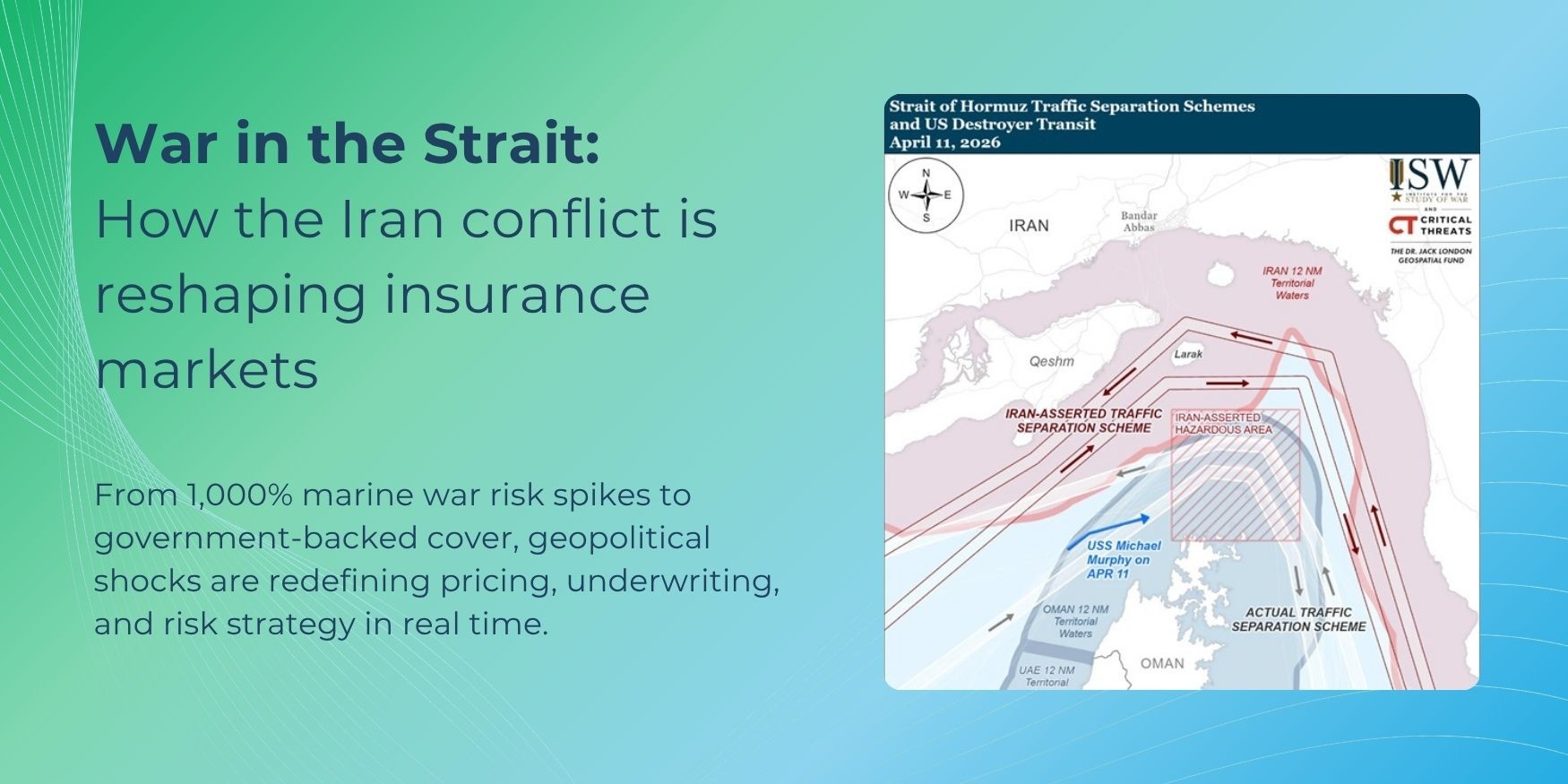
War in the Strait: How the Iran Conflict Is Reshaping Insurance Markets
From 1,000% marine war risk spikes to government-backed cover, geopolitical shocks are redefining pricing, underwriting, and risk strategy in real time.

What’s Going On? Reality check: AI and pricing in production
AI in insurance is no longer about potential, it’s about what’s already working
Embrace Change, Don’t Fear It
From the CTO's Desk: Agility Is a Strategic Imperative

Modern Pricing: The Competitive Edge Insurers Can No Longer Ignore
How advanced analytics and dynamic pricing are reshaping underwriting, profitability, and competitive positioning in insurance
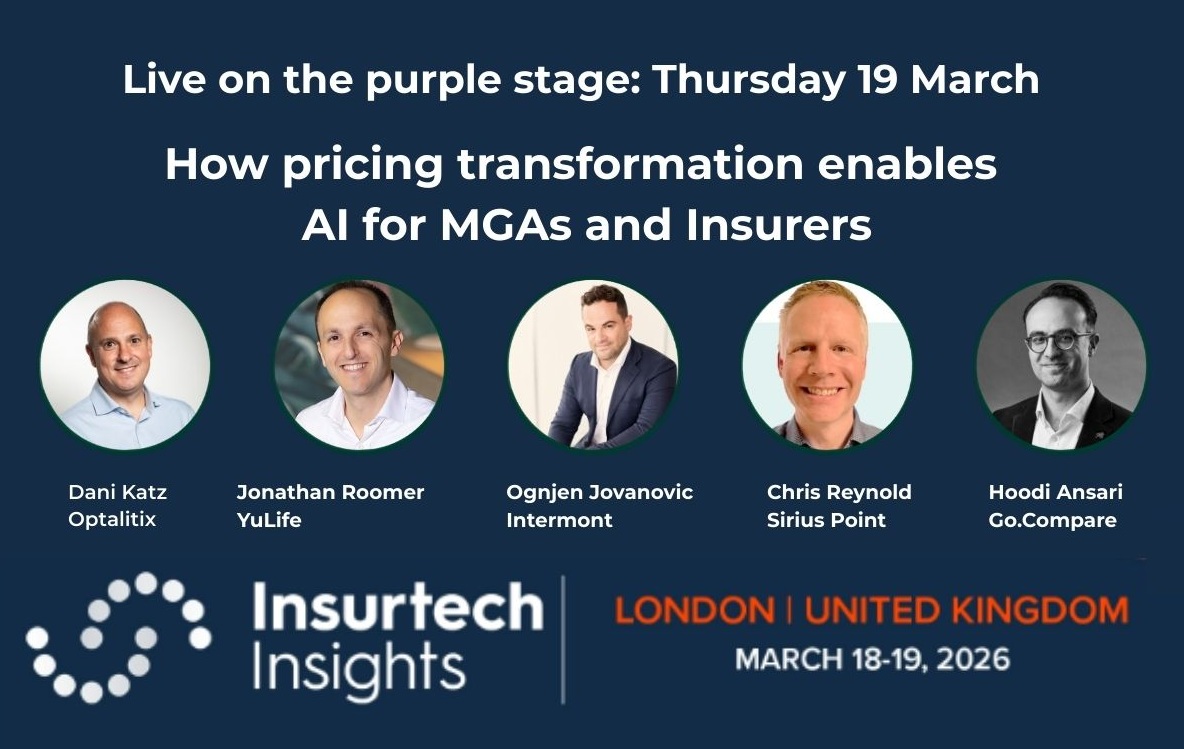
Explore Cutting-Edge Pricing and Underwriting Technology at ITI
Visit Optalitix at stand B23

Optalitix Partners with Intermont to Power Digital Underwriting in the Netherlands
Strategic partnership with Dutch MGA Intermont modernises pricing and underwriting operations and establishes a flagship Optalitix use case in the Dutch market.

Supply-demand fundamentals favour buyers during 1/1 renewals
With capital at record levels and demand lagging, cedents are pushing for meaningful pricing reductions and fewer exclusions; reinsurers are selectively flexible, but intent on protecting portfolio quality.

Reflecting on 2025: A Year of Growth, Innovation, and Industry Recognition at Optalitix
Celebrating Client Success, Key Milestones, and Looking Ahead to 2026
GIRO 2025: Key Takeaways
What’s changing in general insurance: AI, pricing sophistication, capital validation, reserving evolution, and climate risk

Significant market changes as reinsurers prepare for the renewal season
After 3 years of market hardening, moderating catastrophe losses and rising reinsurance capital are reshaping renewal dynamics heading into 2026
Data, Speed, and Insight: The Future of Reinsurance Risk Pricing
Harnessing modern analytics and cloud technology to transform actuarial decision-making and strengthen portfolio performance

Autumn Update 2025: Innovation, Renewal, and Market Momentum
Your guide to the latest renewal trends, pricing insights, and standout client success stories
Listening to the Market: Why Understanding Our Clients Is Our Greatest Innovation
The Power of Listening: Too often, technology companies build first and listen later