

Researchers claim to have trained a machine learning system to identify posts on social media that aim to manipulate political events. This has been made possible, researchers claim, through the development of an automated machine learning system that identifies certain posts based around their content.
There are thought to be a rising number of political events targeted by foreign activity via social media networks. Researchers have found that these foreign manipulation campaigns can be identified when looking at the timing, the URLs contained in posts, as well as the length of the these posts.
Princeton University’s Dr Meysam Alizadeh, one of the co-authors on the research, stated in an article by The Guardian “We can use machine learning to automatically identify the content of troll postings and track an online information operation without human intervention”
The research team reports in the journal Science Advances exactly how the work was carried out, using content from four well-known social media campaigns that were targeted to the US. As a comparison, the researchers also used data from American Twitter accounts, including both average users and those engaged in the country’s politics. In addition to this, the research also used posts from accounts on Reddit that weren’t associated to any of these campaigns.
Once the system had been trained, the research then explored whether it could distinguish between normal user activity and trolls. The team found positive results, with posts flagged up by the technology generally being those made by trolls. However, it’s worth noting that whilst the system did identify some of the troll posts, it did not pick up on all of them.

Director of Cardiff University’s Crime and Security Research Institute Prof Martin Innes commented “This is an important, interesting and sometimes intriguing piece of analysis”
“That machine learning algorithms should be able to identify similar content from within bounded datasets is perhaps to be expected, as after all there were already signals in the data that enabled them to be connected. But as the authors quite correctly clarify, there is a gap still to be bridged in terms of applying these approaches ‘in the wild’ to identify ‘live’ operations.”
This approach, the team claim, is different from detecting bots – an important point to note as these social media campaigns very often involve posts made by humans.
In addition to distinguishing between the activity of trolls and that of normal users, the research also found differences in the technology’s ability to detect, dependent on the country – Dr Alizadeh stating the system’s performance was “near-perfect; close to 99% accurate” for Venezuelan campaigns. In addition to this, Chinese activity was claimed to be easier to detect in comparison to that from Russia.
However, whilst the campaigns of some countries were easier to detect than others, Dr Alizadeh notes that this does not mean certain countries are better at disguising themselves as regular US users, and that there are a whole host of other reasons why some are more difficult to spot – “For example, the Venezuelans always talk about politics. The Russian trolls, some of them never talk about politics – they engage in hashtag games or share links to download music. Why are Russian trolls doing that? One answer could be to build their own audience.”

Optalitix Partners with H.W. Kaufman Group to Digitise and Scale London Market Underwriting
New API-driven platform enables Burns & Wilcox to integrate London Market capacity into a unified quoting workflow, accelerating speed, scale, and efficiency

Upcoming Events for April and May
In London, Barcelona and USA
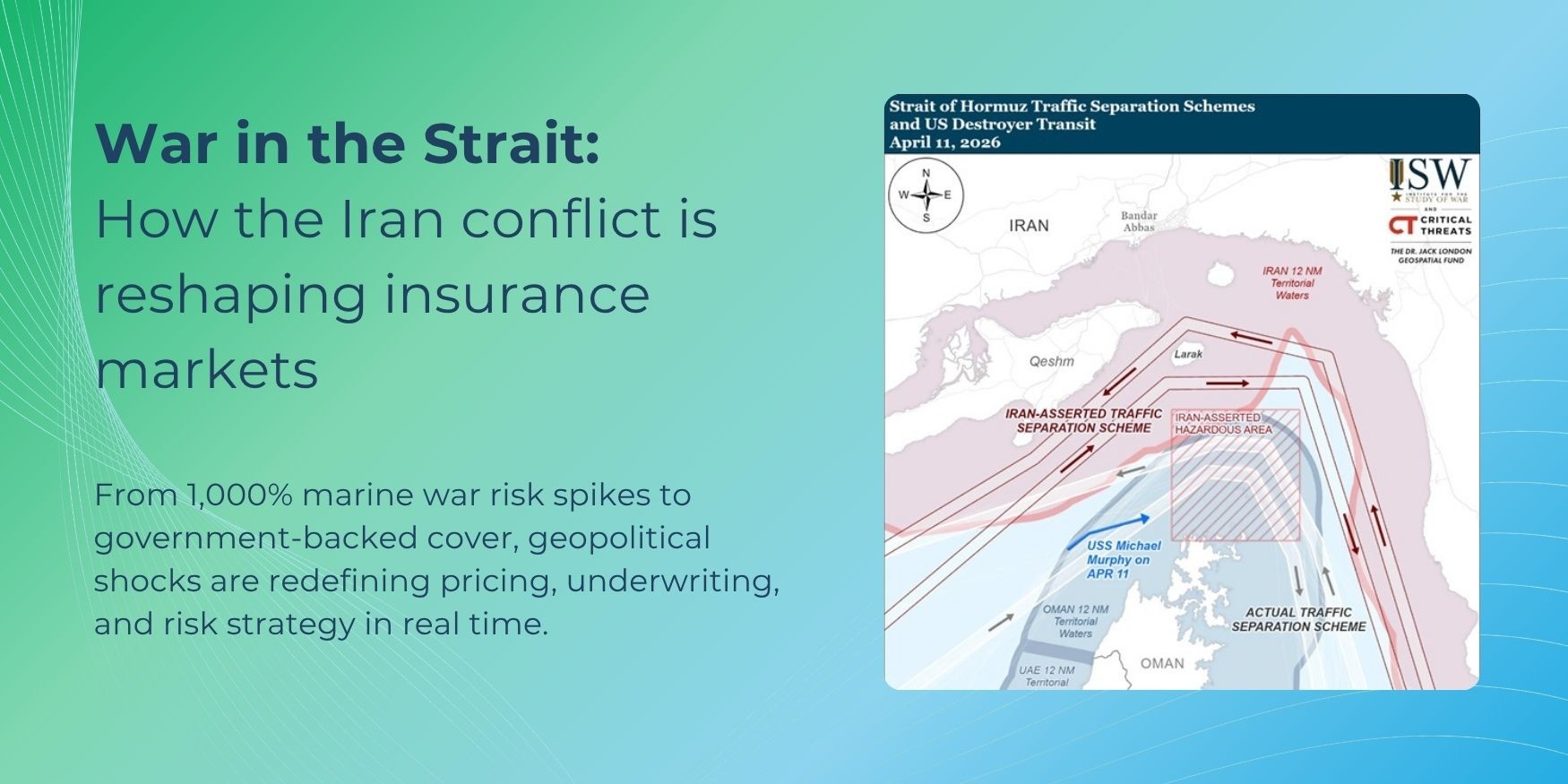
War in the Strait: How the Iran Conflict Is Reshaping Insurance Markets
From 1,000% marine war risk spikes to government-backed cover, geopolitical shocks are redefining pricing, underwriting, and risk strategy in real time.

What’s Going On? Reality check: AI and pricing in production
AI in insurance is no longer about potential, it’s about what’s already working

Embrace Change, Don’t Fear It
From the CTO's Desk: Agility Is a Strategic Imperative
Modern Pricing: The Competitive Edge Insurers Can No Longer Ignore
How advanced analytics and dynamic pricing are reshaping underwriting, profitability, and competitive positioning in insurance

Explore Cutting-Edge Pricing and Underwriting Technology at ITI
Visit Optalitix at stand B23

Optalitix Partners with Intermont to Power Digital Underwriting in the Netherlands
Strategic partnership with Dutch MGA Intermont modernises pricing and underwriting operations and establishes a flagship Optalitix use case in the Dutch market.
Supply-demand fundamentals favour buyers during 1/1 renewals
With capital at record levels and demand lagging, cedents are pushing for meaningful pricing reductions and fewer exclusions; reinsurers are selectively flexible, but intent on protecting portfolio quality.

Reflecting on 2025: A Year of Growth, Innovation, and Industry Recognition at Optalitix
Celebrating Client Success, Key Milestones, and Looking Ahead to 2026

GIRO 2025: Key Takeaways
What’s changing in general insurance: AI, pricing sophistication, capital validation, reserving evolution, and climate risk
Significant market changes as reinsurers prepare for the renewal season
After 3 years of market hardening, moderating catastrophe losses and rising reinsurance capital are reshaping renewal dynamics heading into 2026

Data, Speed, and Insight: The Future of Reinsurance Risk Pricing
Harnessing modern analytics and cloud technology to transform actuarial decision-making and strengthen portfolio performance

Autumn Update 2025: Innovation, Renewal, and Market Momentum
Your guide to the latest renewal trends, pricing insights, and standout client success stories

Listening to the Market: Why Understanding Our Clients Is Our Greatest Innovation
The Power of Listening: Too often, technology companies build first and listen later