
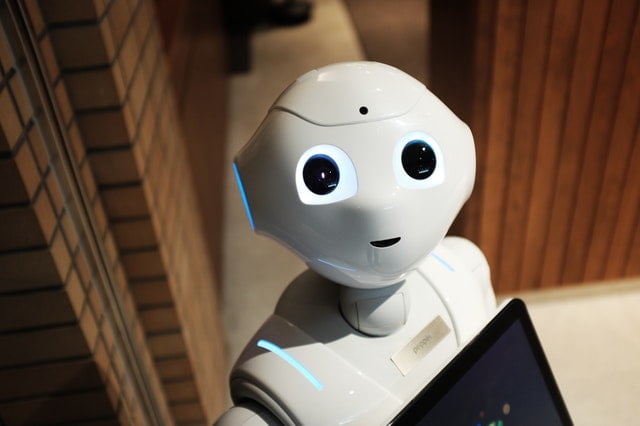
Yes, in certain types of occupations, machine learning technology has already started to replace humans. It is believed that as more investment goes into machine learning (and more organizations and companies implement this tech) that machine learning will take over even more roles usually taken on by humans.
However, it is worth remembering that whilst machine learning will end up replacing humans with some kinds of work, it will equally create as many job opportunities too and even enable people to do their job better than before.
What is machine learning?
Machine learning involves automated algorithms that find patterns in colossal amounts of information and makes links with this data that a human could not. Machine learning solves problems, not a human. The human defines the problem for the machine learning model to fix.
Machine learning is increasingly being used for complex solutions, as humans are only needed to define the problem for the computer, and then it analyses and finds the solution itself.
Machine learning in the workplace
In a study carried out by Oxford University, Yale University and AI Impacts that involved talking to 352 machine learning experts about their predictions for AI (which machine learning is an offshoot of) in the workplace, some interesting results materialised.
The experts who participated in the survey predicted when they believe the crossover point is likely to be when machine learning technology will end up performing better than humans can. They believed that machines will:
- Be better at translating languages by 2024
- Outperform humans writing essays by 2026
- Be able to drive lorries by 2027
- Outperform in retail by 2031
- Outperform as a surgeon by 2053
The study even possibly suggests that there is a 50% chance AI and its related technology will perform better than humans in 45 years time!
Jobs susceptible to machine learning - or are they?
Researchers at PWC suggest that approximately 30% of jobs in the UK are threatened by automation from robotics and AI by 2030. This was deemed higher in particular sectors than others such as transport, wholesale, retail and manufacturing.
Professions deemed less likely to be threatened by machine learning included education, social work, and the healthcare sector. At the same time, it is impossible to say that any industry is immune from possible machine learning developments and AI.
However, one interesting aspect that PWC highlighted is that it is much more likely that simply the nature of the job will change, as opposed to disappearing altogether.
Machine learning aiding productivity?
Another thing to consider is that in some roles, machine learning and AI capabilities may allow people to be more productive in their roles, rather than hindering it.
For example, advanced technologies like natural language processing can streamline data mining through the application of algorithms to model topics. In areas such as customer service or insights, this can be highly beneficial, allowing a team to get on with implementing a strategy based on this information rather than having to spend large amounts of time data mining instead.
Machine learning can absolutely be a force for good in many professions, given that it can ensure that complicated tasks, such as those involving big data, are carried out with speed, and high levels of accuracy too. This can also allow workers to be far more creative and could aid innovation if machine learning can take care of a complicated, repetitive tasks, whilst employers can pursue their ideas they wouldn't have time to consider otherwise.

What Industries Could AI Impact the Most?
From virtual health care assistants to driverless taxis, AI is transforming the way the world operates, making processes more productive and efficient. Read more.
How AI Is Used in Our Everyday Lives
AI permeates several aspects of our everyday lives, from our from smart phones to shopping and much more. Learn more about the impact of AI here.

How Is AI is Changing The World?
Artificial Intelligence (AI) has the power to change the world across multiple sectors including business, healthcare, transport and education. Learn more here.
How Could AI Change Future Workplaces
AI has the power to change the future of working globally. Read more about how AI can assist with staff collaboration, hiring employees, and remote working here.
How Can Machine Learning Help My Business?
Machine learning can help your business thrive by processes such as automating decisions, mundane tasks, and security. Find out more here.
Hot Models
During Covid-19, AI or non-human solutions were being used to model potential outcomes and solutions. Read how this was done and the findings that came from AI.
Optalitix selected to participate in Lloyds Lab
The Optalitix team are delighted to have been selected to participate in cohort 4 of the Lloyds Lab. Read more about their application and success in this guide.

How do machine learning models work?
There are a variety of regression and classification models within both the supervised and unsupervised categories of machine learning, a type of AI.
Will machine learning replace humans?
Machine learning technology has already started to replace humans, yet it has potential to create many opportunities and enable people to do their job better.

Is AI taking jobs?
Developments in AI led to machines taking predominantly unskilled jobs, and this looks set to continue. Learn more about how AI is impacting the workforce here.

How is AI being used in healthcare?
New AI technology from Microsoft and Google is able to detect diseases such as prostate cancer and diabetic retinopathy. Learn more the NHS's use of AI.

How is AI used in financial services?
The financial services industry is being transformed by AI. Learn how AI is used as robo-advisory services, chatbots, and algorithmic trading in finance.
What is the AI industry worth?
The AI industry is estimated to be worth somewhere in the region of $5 trillion dollars, and this number is only set to increase in the future. Learn more here.
How does machine learning work?
Machine learning algorithms are a type of AI that can learn patterns and processes with minimal to no human intervention. Discover more about how they work here.
How is machine learning used in finance?
The financial sector is increasingly using machine learning in order to be more accessible, efficient and provide a better customer experience overall.