

Breaking down what you need to know about algorithmic underwriting and smart follow syndicates
We are excited by the emergence of the technology for algorithmic underwriting as a new method of insuring risks in the London market. This report considers the impact on Lloyd’s and the London Market where complex risks are typically underwritten. We will focus on automatic follow underwriting (called smart follow) and automatic lead underwriting (called smart lead) which these algorithms drive, as well as the technology that sits behind it. This is an important emerging market for insurance with recent start-ups such as Ki (part of Brit), Vave (part of Canopius) and Smart Tracker (part of Beazley) being prime examples of this process operating for both smart follow and smart lead solutions, having raised hundreds of millions of pounds to get going. The growth in interest in algorithmic underwriting is understandable given the need for a reduced cost of writing business in the London Market, compounded by the drive to become more digital.
Smart follow and smart lead
Smart follow underwriting uses algorithms to determine which risks to “follow”, i.e. insure a proportion of the risk, based on a set of algorithms using historical data on the underwriter leading their risk, and the type of risk involved. It is by far the most common type of algorithmic underwriting in the London Market at the moment.
Smart lead underwriters use algorithms to price risk, with limited underwriter involvement. While common in retail classes like motor and home, this is rare in the Lloyd’s market due to the complexity of specialty risks which makes it hard to price accurately. Our report focuses on the smart follow market.
Algorithmic underwriting will drive changes in the market, as more smart follow underwriters emerge, there will be a change in the process of underwriting risk, with the best lead underwriters carrying significant auto-follow capacity, making them attractive options for brokers to place business with. We expect there will be continued growth in follow-only syndicates as the reduced costs and potential to achieve above-average returns attract capital to the market. There are significant advantages to all participants in the smart follow, algorithmically driven ecosystem:
- Smart follow syndicates get to write more business that is priced by the best lead underwriters in the market, generating better profits and increasing their business exposure.
- Lead underwriters gain by having additional capacity and improved pricing credibility linked to the number of smart follow syndicates that follow them, making them more attractive to brokers looking for a quicker bind process.
- Brokers gain by reducing the amount of work required to achieve the cover needed for each risk as automatic capacity is provided by the smart follow syndicates.
The emergence of risk exchanges could also fuel the growth in smart follow syndicates. These exchanges will provide a source of large volumes of priced risks that can then be selected by smart follow syndicates to expand and diversify their portfolio.
Benefits of smart follow algorithmic underwriting.
Algorithmic underwriting is a new way of writing insurance business that is proving popular for Lloyd’s syndicates. It offers benefits to all the parties in the process:
high-volume.
Benefits to insurers using smart follow underwriting
- Increased levels of business by accessing high volume quotes across the market at low cost.
- Reduces syndicates' overall capital requirements by optimising portfolio risks.
- Improved risk profits by accessing premiums provided by the best underwriters in the London Market.
- Expands syndicates risk knowledge into new areas using expert underwriters as a guide.
- Access emerging new insurance exchanges that provide capacity to the market.
Benefits to lead underwriters
- Expands capacity for lead underwriters, making them more attractive for brokers to lead risks.
- Provides credibility for lead underwriters who are chosen based on their experience and capabilities.
Benefits to brokers
- Reduces the number of follow underwriters required, speeding up time to bind the risk and reducing costs.
Smart follow underwriting will become the market standard
The economic value of the smart follow model and profits from existing follow only syndicates together with the drive to digitize Lloyd’s will cause the smart follow syndicate to grow significantly in capacity provided. Capital providers view these strategies as an attractive way to deploy capital, and while the risk experience of the existing smart follow syndicates is still new, it is looking positive with Smart Tracker generating profits in 2021. Future risk outcomes for these syndicates will be closely followed by the rest of the market and we expect more smart follow syndicates to be set up. For brokers, the attractiveness of having large capacity provided by auto-follow syndicates for their lead underwriter will grow. The recognition of the lead underwriter’s expertise and the potential for greater capacity will make lead syndicates with high auto-follow capacity attractive to brokers. Conversely, lead underwriters with fewer syndicates choosing to provide auto-follow capacity (possibly due to adverse performance or lack of experience in a line of business) will become less attractive for brokers to approach due to the difficulty of convincing other underwriters to follow the lead underwriter’s pricing. This will result in the best lead underwriters being able to dictate terms, and potentially increase charges for the following syndicates. Lead underwriters will work to attract smart follow syndicates, and to boost their reputation in the market to increase the automatic capacity they attract with any business they price. As this market grows, and capital flows into the market, expect these smart follow syndicates to grow significantly, and for the best lead syndicates to boost their pricing expertise to attract them while worse performing lead underwriters will struggle to attract broker attention and lose market share. This Darwinian process of superior pricing driving additional business will become the future of the London market. Look out next week for our in-depth analysis on how it all works.

How to get underwriting efficiency. Workflow and the underwriting workbench
Improve underwriting efficiency with Optalitix's workflow and workbench expertise. Our tools handle various processes, quotes, and large underwriting departments.
A practical guide to underwriting workbenches
Explore how our underwriting workbench aids insurers in handling incoming risks, monitoring their risk profile, and aligning management with their risk appetite.
Optalitix celebrates 10 years!
Optalitix products now available on Google Cloud Marketplace
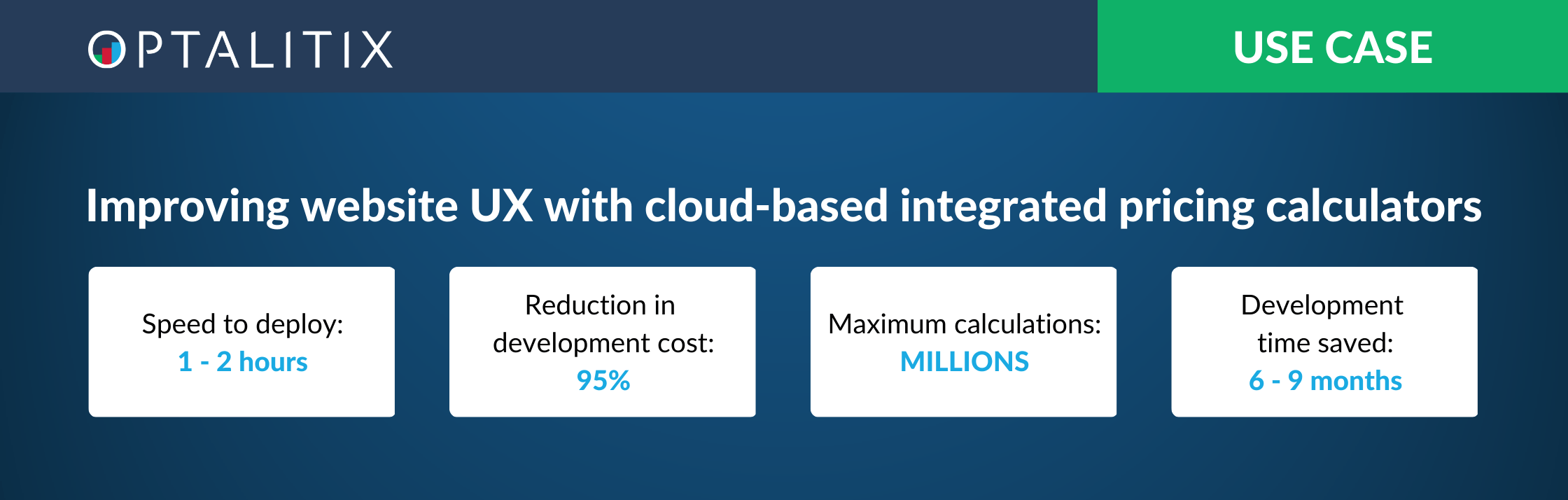
Onespark use case: Improving website UX with cloud-based integrated pricing calculators
Building a pricing calculator into a CRM for Almagro Capital
Almagro wanted a calculator for their products to be built into the Zoho CRM system. Find out how Optalitix Models connected the Almagro CRM system in Zoho here.
Meet Optalitix at Insurtech Insights EU 2023
The Insurech Conference connects insurers and investors, offering an unparalleled experience and access to industry innovators. Explore 2023 Conference insights!
Optalitix appoints Paul Hewitt to their Board following the investment into Optalitix by 24Haymarket
Paul Hewitt has been appointed to the Board of Optalitix, advising on insurance strategy, product development and industry partnerships. Read more in this guide.
.jpeg)
Building a pricing system from a spreadsheet
Have you got an Excel pricing model that you would love to turn into a system? Find out how to build a pricing system from a spreadsheet in our guide.
Optalitix & Avamore launching new lending platform using Optalitix Originate
Optalitix Client Avamore will be launching its new core lending platform using Optalitix Originate architecture. Read more about the platform and its targets.
Optalitix Models integrates easily with Retool to create no-code apps from spreadsheets
Spreadsheet-based calculations representing real-world situations are referred to a models. See how to convert yours into usable application software here.
Optalitix announces that it has achieved the prestigious ISO 27001 certification
OOptalitix announced it has achieved the prestigious ISO 27001 certification by implementing an Information Security Management System (ISMS). Read more here
New pricing standards at Lloyd's require improvements in underwriting systems
New principles for doing business at Lloyd’s will encourage syndicates to digitise their processes, especially underwriting. Find out more here.
Learn about insurance innovation from the DIA conference
The Dia Munich Conference, in 2022, showcased cutting-edge insurance technology, highlighting the growing fusion of insurance and technology in mainland Europe.
Optalitix raises £4m of funding for growth
Optalitix is an award-winning technology business that adds value to financial institutions with low code SaaS products, data analysis and AI models. Read more.