
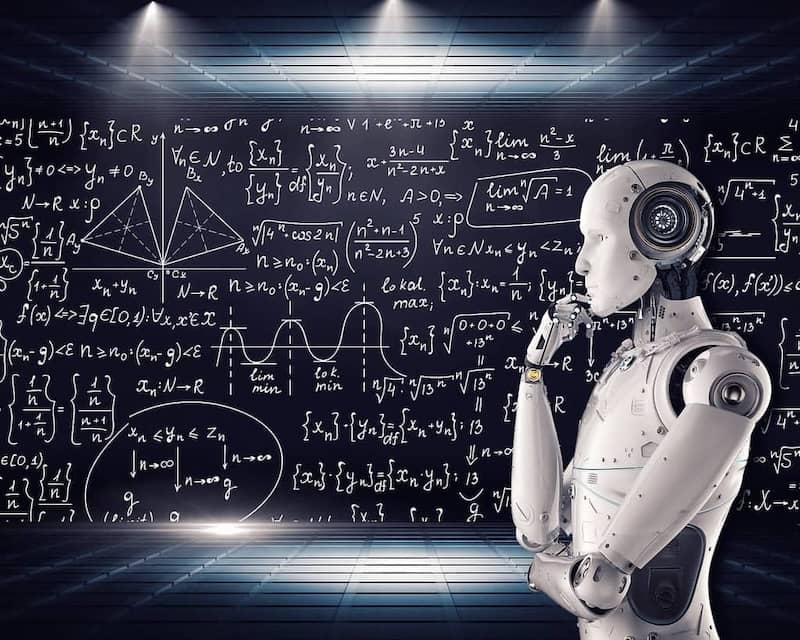
The Artificial intelligence tool Generative Pre-training Transformer (GPT-3) has gained much attention recently, renowned for its impressive abilities in prescribing medication, designing websites and answering questions.
GPT-3 is the third generation of a machine learning model, automatically learning from its experiences without the need for programming. This tool has been developed by the artificial intelligence research lab OpenAI, comprised of its for-profit OpenAI LP corporation and its non-profit OpenAI Inc parent organisation.
Amongst its array of impressive qualities, GPT-3 is also causing quite a stir after its GPT-2 predecessor was dubbed “too dangerous to release” – claimed to create text indistinguishable from that written by humans.
What Can GPT-3 Do?
Currently, GPT-3 is closed-access, its abilities being demonstrated and shared via social media - the likes of Sharif Shameem showing how the AI can be used to describe designs and subsequently build them, even though the AI has not been taught to produce code.
In addition to this, GPT-3 has also been reported to “auto-complete” incomplete images, using its database to suggest the pixels that are believed should make up the whole of the image.
GPT-3 holds such capabilities due to the fact it’s been trained on the Common Crawl – an archive of the internet with a near 1 trillion words of data.
Whilst GPT-3 was made available commercially last month, work was still required to explore how the tool should be used, head of policy Jack Clark stating: “We need to perform experimentation to find out what they can and can’t do”
“If you can’t anticipate all the abilities of a model, you have to prod it to see what it can do. There are many more people than us who are better at thinking what it can do maliciously.”
Whilst this tool has received impressive reviews, some suggesting it could be a threat to the industry, with others even going as far as claiming it’s showing self-awareness, Sam Altman, the CEO of OpenAI has commented that this “hype” is “way too much”.
“It’s impressive (thanks for the nice compliments!) but it still has serious weaknesses and sometimes makes very silly mistakes. AI is going to change the world, but GPT-3 is just a very early glimpse. We have a lot still to figure out”.
Researchers at OpenAI have also commented that ‘GPT-3 samples [can] lose coherence over sufficiently long passages, contradict themselves, and occasionally contain non-sequitur sentences or paragraphs.”
Whilst the tool has received a glowing response by many, praising it for the innovative capabilities it has showcased, Altman and the OpenAI researchers is not alone in acknowledging its weaknesses and “silly mistakes”. Computer scientist and former Facebook employee Kevin Lacker has shown that the tool is unable to answer questions that humans would find obvious, whilst also not being able to distinguish questions that are “nonsense”, answering them as if they were not.
For example, to the question “How many eyes does my foot have?” the system has been reported to respond “Your foot has two eyes”, whilst asking it “How many rainbows does it take to jump from Hawaii to seventeen” yields the result “It takes two rainbows to jump from Hawaii to seventeen.”
It’s important to note that these machine learning algorithms do not exactly think and understand the language that they are communicating through, and are rather creating a response based off its examination of huge syntax databases. This can lead to such nonsensical responses as those given above.

Get rid of the cr…p and do something Cool!
Read the valuable insights offered by Buster Tolfree the Commercial Director – Mortgages at a Tip-Talks event co-sponsored by United Trust Bank and Optalitix.

The Magic of AI
Demystifying AI is a challenge facing most businesses as automation and machine learning shift to being a necessity. Read more about the magic of AI here.
Google’s AI Claims to Be Improving How It Recognises News and Misinformation
Google's Vice President, Pandu Nayak claims that Google is using AI to better understand news and misinformation. Read more about Nayak's theory in this guide.
DeepMind AI Explores How to Improve Chess
Deepmind is an AI company using machine learning to reinvent the game of chess as we know it, with the help of chess champion Vladimir Kramnik. Learn more here.
Dani Katz runs 18km as part of Optalitix Fundraising
Optalitix co-founder Dani Katz ran 18km as part of Optalitix’s fundraising efforts this summer. Read about how he did and the charities that Dani ran for here.
Optalitix Joins Google Cloud Partner Advantage Program
Market leaders in AI and machine learning solutions, Optalitix, announced it has joined the Google Cloud Partner Advantage Program as a Sell and Build partner.
AI Breakthrough Could Accelerate Machine Learning Development
Researchers achieved a new AI breakthrough whereby using light for performing computations can improve machine learning neural networks in speed and efficiency.
AI Used on Facebook and Twitter to Detect Foreign ‘Trolls’
Researchers claim to have trained a machine learning system to identify posts on social media that aim to manipulate political events. Read more in this guide.
Next Generation of AI Described as “Too Dangerous to Release” – Now Released
The Artificial intelligence tool Generative Pre-training Transformer (GPT-3) has gained much attention, but is the technology dangerous? Learn more now.

Elon Musk Predicts AI Will Overtake Humans in 5 Years
Elon Musk has recently claimed that Artificial Intelligence could overtake humans by 2025, and discussed these predictions in a New York Times interview.

Optalitix Named Amongst Start-up Elite in the TechRound100
Optalitix is a finalist in the TechRound100, ranking in the top 100 UK start-ups that have been praised for their innovation. Learn about this competition here.
Identifying Unwanted Bias in Machine Learning
With human-made models comes human-biases, machine learning models are inclined to reflect the biases of the team who built it and the data it is fed.
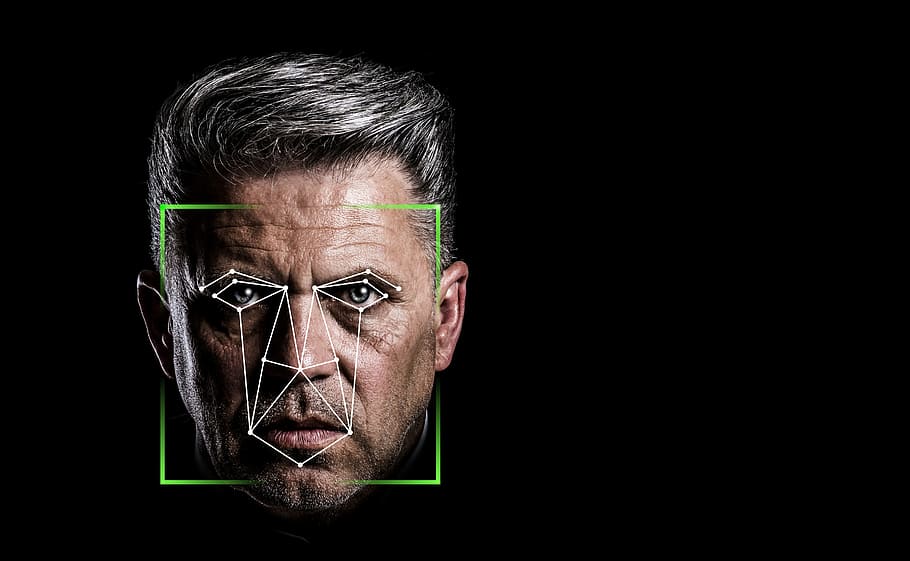
Concerns Rise Over AI Racial Bias as Facial Recognition “Predicts Criminality”
The debate over racial bias in tech has been renewed as a US university claims it can predict criminality through facial recognition. Learn more in this guide..
How Is AI Helping to Fight the Impacts of COVID-19?
AI and machine learning have become key tools in helping to tackle the pandemic, not just in understanding the virus but also how to support different industries.
The Top 5 Strangest Uses of AI
Whilst AI has transformed many essential areas of society, some have also begun to use its technology for the weirder. Take a look at some odd uses of AI here.