
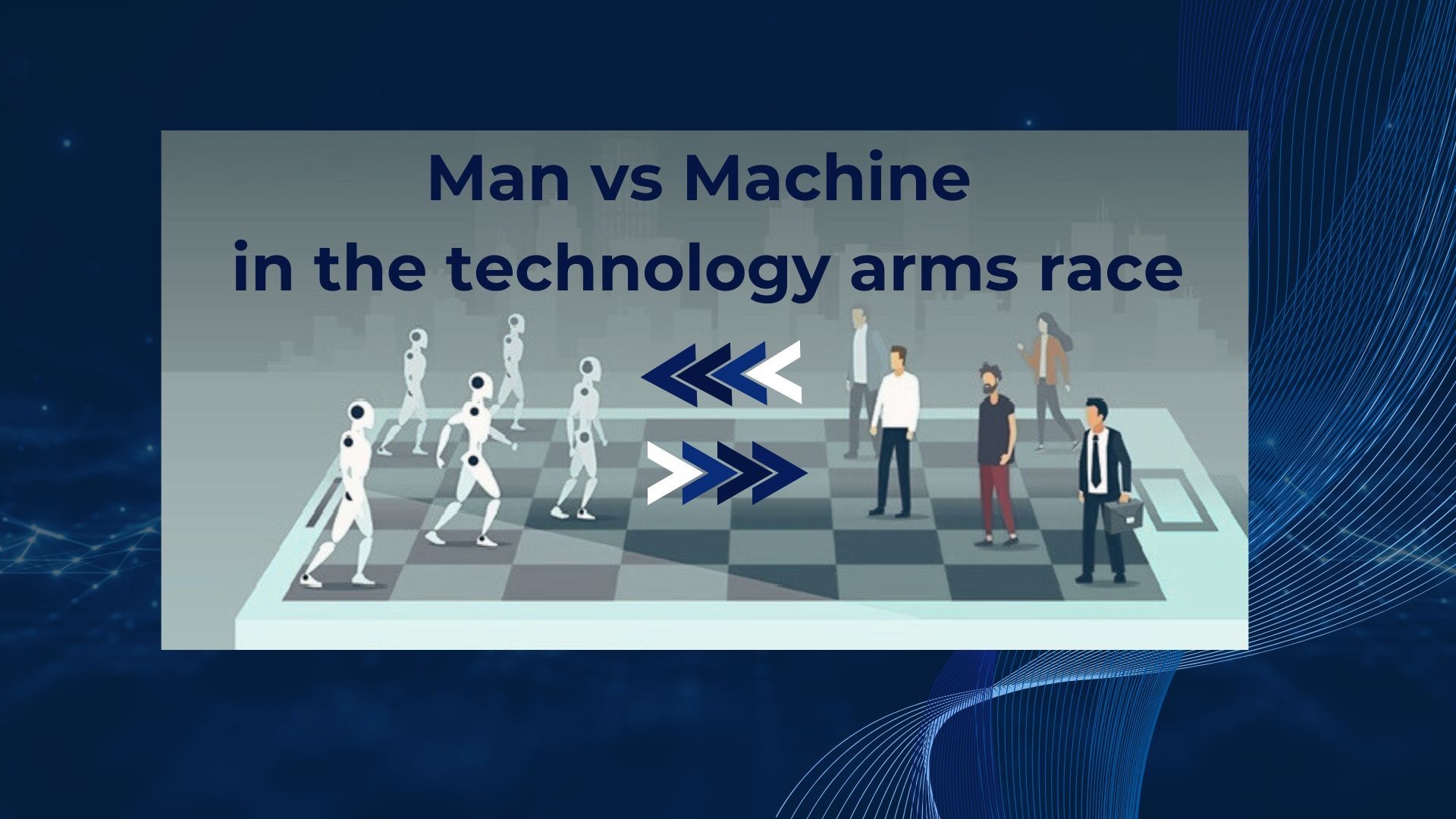
Recently in the insurance industry, a defining challenge has emerged: the competition between human expertise and machine efficiency. As the technology arms race intensifies, insurers must now navigate the balance between leveraging algorithms for automation and maintaining the indispensable value of human judgement.
The insurance sector faces a series of converging pressures that are reshaping its operations. Market softening is a significant factor, as an influx of capital into the insurance market intensifies competition, even as demand for protection continues to rise. At the same time, increasing losses driven by natural disasters and demographic shifts to high-risk zones are driving up claim costs.
As a result, underwriters often grapple with data gaps and insufficient information in their legacy systems to quickly and accurately assess emerging risks. Clients, meanwhile, are raising their expectations, seeking faster quotes, more personalised insurance products, and higher levels of service.
Plugging the data gaps
In response to these challenges, technological advancements are seen as a critical enabler for insurers aiming to maintain their competitiveness. The rise of algorithmic underwriting has sparked debates over whether machines can fully replace human underwriters. Machines are exceptional at processing large volumes of homogeneous data, but they fall short when it comes to key elements of commercial and specialty insurance.
Machines are highly efficient when handling high-volume, low-value risks. Algorithms excel at underwriting simple retailrisks where volume is large, risks are similar, and the impact of errors isvlimited due to the low-risk exposure. They can rapidly analyse vast datasets, providing insights that are difficult for humans to uncover manually. Onceprogrammed (by humans), these algorithms can process countless policies withoutfatigue, offering unmatched scalability.
Humans are a critical part of the process
However, the critical importance of human underwriters is clearer in commercial insurance where risks are much larger and more complex. Risk assessment for commercial pricing is an area where underwriters hold the advantage over algorithms. Fraud detection also remains a domain where human intuition and experience are crucial – machines often struggle to identify dishonest claims and applicants.
In commercial insurance, risks are often unique and multifaceted, requiring underwriters to engage in conversations with brokers to uncover hidden liabilities. Building relationships with brokers through trust and negotiation is essential for high-value insurance contracts. Furthermore, underwriters have the adaptability to ask nuanced questions and adjust their approach based on subtle cues – something static algorithms cannot replicate. They are also more aware of the market dynamics and their competition.
In retail insurance, machines dominate due to the repetitive and homogeneous nature of risks. However, commercial insurance favours humans to drive the process because these policies require bespoke assessments, complex pricing, and negotiation.
Technology challenges are vital to succeed in pricing
The integration of technology into insurance operations presents distinct challenges for key stakeholders. Actuaries often seek better access to data, faster model updates, and coding flexibility to keep up with the evolving market. Underwriters need real-time insights, transparent decision-making processes, and reduced data capture burdens. Executives in the C-suite require timely market feedback, profitability insights, and comprehensive risk exposure analyses to make informed strategic decisions.
Despite the promise of technological solutions, existing tools often fall short. Many only support one coding language, which only a few actuaries and hardly any underwriters understand, making pricing changes slow and costly. Integration projects are frequently complex and time-consuming, with implementation timelines stretching over years.
To thrive in the technology arms race, insurers must adopt a blended approach that combines human expertise with digital data capabilities. Empowering underwriters with user-friendly tools that provide insights without replacing their judgment is a critical first step.
Actuaries should have the flexibility to use diverse coding languages and rapidly update models to stay aligned with market changes. Improving data capture processes and governance will enable better analytics and pricing applications.
Underwriters and actuaries must work together on pricing transformation
The insurance industry is at a crossroads, with several trends driving the future of insurance technology. The digitisation of pricing is transforming the industry, with most insurers undergoing pricing transformation projects driven by competition and regulatory requirements like Lloyd’s’ Pricing Maturity Matrix.
A critical lesson learned from technology integration projects is the importance of bringing underwriters along on the transformation journey. Actuaries may prioritise building the perfect model, but underwriter engagement is critical for adoption and operational success. Flexibility, speed, and transparency are key ingredients for delivering any pricing transformation.
Real-time underwriting initiatives, though still in their infancy, aim to automate quote processing – but underwriters often intervene to ensure proper pricing, and real time is often unachievable across an entire business line. Data is increasingly recognised as a strategic asset, with companies focusing on capturing and analysing quote data to improve pricing accuracy and gain market insights.
Human judgement is vital for insurance pricing
The insurance industry’s technology arms race is not bout choosing between man and machine but about finding ways to harness the strengths of both. Human judgment remains irreplaceable in commercial insurance, while machines excel at automating routine tasks and enhancing decision-making with data-driven insights.
By fostering collaboration between humans and machines, insurers can navigate market challenges, improve profitability, and deliver exceptional value to their clients.

Optalitix partners with CannGen to revolutionise underwriting for a fast-growing industry
To boost pricing platform adoption in the London Market

Leading the Pricing Software Transformation
Start 2025 with a game-changing opportunity!

Wishing you a healthy, happy, and prosperous New Year
Thank you for all your support and collaboration
Adapting to 2025 Insurance Changes: Key Insights Inside
Navigating Insurance Trends: Outlook and Opportunities

Optalitix and PwC announce strategic collaboration
To boost pricing platform adoption in the London Market

Supporting Camden Foodbank’s Christmas Appeal
Help us bring hope and nourishment to those in crisis this holiday season by donating food or contributing online. Together, we can make a meaningful difference.

Highlights from the 2024 GIRO Conference
Exploring Data Strategy, Pricing Innovation, and AI Trends in General Insurance at Birmingham’s ICC

Optalitix partners with Insurance Knowledge Hub to boost insurance industry technology skills
Enhance your skills in underwriting technology today

Meet Optalitix at GIRO 2024
Join leading experts to gain insight into key issues, emerging ideas across the of the actuarial profession.

Optalitix partners with Burns and Wilcox to deliver industry leading technology
Optalitix Quote Software to deliver improved efficiency and insights across the Burns & Wilcox Property, Casualty & Terrorism Portfolios

Hurricane Helene - a blow to price stability hopes?
How the 2024 hurricanes in Florida could change reinsurance pricing and impact insurance markets in 2025

Les Rendez-Vous de Septembre: a window into reinsurance renewals for 2025
The key for 2025 renewals is maintaining pricing discipline. A focus on rate adequacy will be crucial to ensure the right balance between growth and profitability.

Optalitix partners with Go.Compare to offer insurers innovative pricing solution
This will reduce insurers’ system development time and cost, boost speed to market, and enhance pricing optimisation.

Redefining Insurance Pricing for the Digital Age
The way in which risk pricing is being transformed is one of the biggest challenges facing insurers in the Digital Age
Optalitix secures further US$3m led by Calculus Capital to accelerate ambitious growth strategy
The funding proceeds will be used to further accelerate product innovation and support the execution of Optalitix’s ambitious expansion plans.