
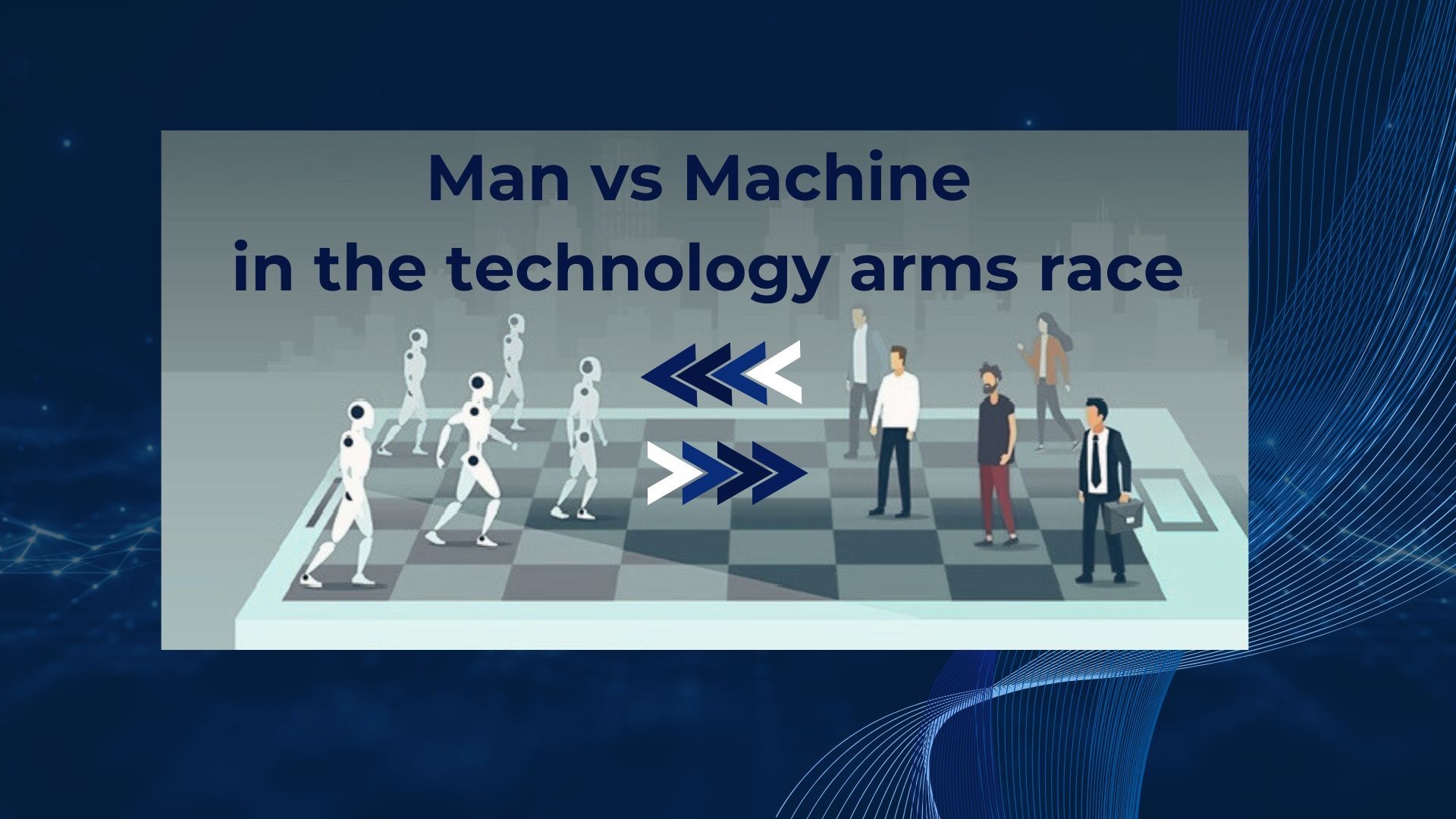
Recently in the insurance industry, a defining challenge has emerged: the competition between human expertise and machine efficiency. As the technology arms race intensifies, insurers must now navigate the balance between leveraging algorithms for automation and maintaining the indispensable value of human judgement.
The insurance sector faces a series of converging pressures that are reshaping its operations. Market softening is a significant factor, as an influx of capital into the insurance market intensifies competition, even as demand for protection continues to rise. At the same time, increasing losses driven by natural disasters and demographic shifts to high-risk zones are driving up claim costs.
As a result, underwriters often grapple with data gaps and insufficient information in their legacy systems to quickly and accurately assess emerging risks. Clients, meanwhile, are raising their expectations, seeking faster quotes, more personalised insurance products, and higher levels of service.
Plugging the data gaps
In response to these challenges, technological advancements are seen as a critical enabler for insurers aiming to maintain their competitiveness. The rise of algorithmic underwriting has sparked debates over whether machines can fully replace human underwriters. Machines are exceptional at processing large volumes of homogeneous data, but they fall short when it comes to key elements of commercial and specialty insurance.
Machines are highly efficient when handling high-volume, low-value risks. Algorithms excel at underwriting simple retailrisks where volume is large, risks are similar, and the impact of errors isvlimited due to the low-risk exposure. They can rapidly analyse vast datasets, providing insights that are difficult for humans to uncover manually. Onceprogrammed (by humans), these algorithms can process countless policies withoutfatigue, offering unmatched scalability.
Humans are a critical part of the process
However, the critical importance of human underwriters is clearer in commercial insurance where risks are much larger and more complex. Risk assessment for commercial pricing is an area where underwriters hold the advantage over algorithms. Fraud detection also remains a domain where human intuition and experience are crucial – machines often struggle to identify dishonest claims and applicants.
In commercial insurance, risks are often unique and multifaceted, requiring underwriters to engage in conversations with brokers to uncover hidden liabilities. Building relationships with brokers through trust and negotiation is essential for high-value insurance contracts. Furthermore, underwriters have the adaptability to ask nuanced questions and adjust their approach based on subtle cues – something static algorithms cannot replicate. They are also more aware of the market dynamics and their competition.
In retail insurance, machines dominate due to the repetitive and homogeneous nature of risks. However, commercial insurance favours humans to drive the process because these policies require bespoke assessments, complex pricing, and negotiation.
Technology challenges are vital to succeed in pricing
The integration of technology into insurance operations presents distinct challenges for key stakeholders. Actuaries often seek better access to data, faster model updates, and coding flexibility to keep up with the evolving market. Underwriters need real-time insights, transparent decision-making processes, and reduced data capture burdens. Executives in the C-suite require timely market feedback, profitability insights, and comprehensive risk exposure analyses to make informed strategic decisions.
Despite the promise of technological solutions, existing tools often fall short. Many only support one coding language, which only a few actuaries and hardly any underwriters understand, making pricing changes slow and costly. Integration projects are frequently complex and time-consuming, with implementation timelines stretching over years.
To thrive in the technology arms race, insurers must adopt a blended approach that combines human expertise with digital data capabilities. Empowering underwriters with user-friendly tools that provide insights without replacing their judgment is a critical first step.
Actuaries should have the flexibility to use diverse coding languages and rapidly update models to stay aligned with market changes. Improving data capture processes and governance will enable better analytics and pricing applications.
Underwriters and actuaries must work together on pricing transformation
The insurance industry is at a crossroads, with several trends driving the future of insurance technology. The digitisation of pricing is transforming the industry, with most insurers undergoing pricing transformation projects driven by competition and regulatory requirements like Lloyd’s’ Pricing Maturity Matrix.
A critical lesson learned from technology integration projects is the importance of bringing underwriters along on the transformation journey. Actuaries may prioritise building the perfect model, but underwriter engagement is critical for adoption and operational success. Flexibility, speed, and transparency are key ingredients for delivering any pricing transformation.
Real-time underwriting initiatives, though still in their infancy, aim to automate quote processing – but underwriters often intervene to ensure proper pricing, and real time is often unachievable across an entire business line. Data is increasingly recognised as a strategic asset, with companies focusing on capturing and analysing quote data to improve pricing accuracy and gain market insights.
Human judgement is vital for insurance pricing
The insurance industry’s technology arms race is not bout choosing between man and machine but about finding ways to harness the strengths of both. Human judgment remains irreplaceable in commercial insurance, while machines excel at automating routine tasks and enhancing decision-making with data-driven insights.
By fostering collaboration between humans and machines, insurers can navigate market challenges, improve profitability, and deliver exceptional value to their clients.

Get rid of the cr…p and do something Cool!
Read the valuable insights offered by Buster Tolfree the Commercial Director – Mortgages at a Tip-Talks event co-sponsored by United Trust Bank and Optalitix.

The Magic of AI
Demystifying AI is a challenge facing most businesses as automation and machine learning shift to being a necessity. Read more about the magic of AI here.
Google’s AI Claims to Be Improving How It Recognises News and Misinformation
Google's Vice President, Pandu Nayak claims that Google is using AI to better understand news and misinformation. Read more about Nayak's theory in this guide.
DeepMind AI Explores How to Improve Chess
Deepmind is an AI company using machine learning to reinvent the game of chess as we know it, with the help of chess champion Vladimir Kramnik. Learn more here.
Dani Katz runs 18km as part of Optalitix Fundraising
Optalitix co-founder Dani Katz ran 18km as part of Optalitix’s fundraising efforts this summer. Read about how he did and the charities that Dani ran for here.
Optalitix Joins Google Cloud Partner Advantage Program
Market leaders in AI and machine learning solutions, Optalitix, announced it has joined the Google Cloud Partner Advantage Program as a Sell and Build partner.
AI Breakthrough Could Accelerate Machine Learning Development
Researchers achieved a new AI breakthrough whereby using light for performing computations can improve machine learning neural networks in speed and efficiency.
AI Used on Facebook and Twitter to Detect Foreign ‘Trolls’
Researchers claim to have trained a machine learning system to identify posts on social media that aim to manipulate political events. Read more in this guide.

Next Generation of AI Described as “Too Dangerous to Release” – Now Released
The Artificial intelligence tool Generative Pre-training Transformer (GPT-3) has gained much attention, but is the technology dangerous? Learn more now.

Elon Musk Predicts AI Will Overtake Humans in 5 Years
Elon Musk has recently claimed that Artificial Intelligence could overtake humans by 2025, and discussed these predictions in a New York Times interview.

Optalitix Named Amongst Start-up Elite in the TechRound100
Optalitix is a finalist in the TechRound100, ranking in the top 100 UK start-ups that have been praised for their innovation. Learn about this competition here.
Identifying Unwanted Bias in Machine Learning
With human-made models comes human-biases, machine learning models are inclined to reflect the biases of the team who built it and the data it is fed.

Concerns Rise Over AI Racial Bias as Facial Recognition “Predicts Criminality”
The debate over racial bias in tech has been renewed as a US university claims it can predict criminality through facial recognition. Learn more in this guide..
How Is AI Helping to Fight the Impacts of COVID-19?
AI and machine learning have become key tools in helping to tackle the pandemic, not just in understanding the virus but also how to support different industries.
The Top 5 Strangest Uses of AI
Whilst AI has transformed many essential areas of society, some have also begun to use its technology for the weirder. Take a look at some odd uses of AI here.