

Listening to the government’s health and science advisors on television this week, has been somewhat frightening. The world does not have the answer to its biggest problem, in fact our smartest minds are at a bit of a loss. There is no settled science that can accurately predict an outcome, there is no experience to draw on and no sign of a solution.
What we have heard a lot of this last few weeks, is modelling, curves and the power of models to efficiently determine an outcome or at the very least predict an outcome. Acknowledging the fact that the greatest human minds are doing their very best to address the pending scale of this crises without much success is it any surprise that AI or non - human solutions are being used to model potential outcomes and solutions.
In the actuarial world under the circumstances a data scientist will look to create a model that will help plan a route forward, how would they do this?What is going on? Have we seen anything like this before? Has something similar previously been experienced we can learn from? These would be the initial thoughts of anyone wishing to create a model. Replicating a similar scenario would be the starting point of anyone wishing to begin a modelling exercise.
We know we have a disease that is spreading by contact, have we seen something that may not be exactly the same but similar such as perhaps HIV that could be used to begin the modelling process.
- Without actuals we need to start setting the assumptions
One of the assumptions might be, the Rate of transmission, scientists would call this the R rate, or number of potential cases or people that could get infected. This R rate is one of the most if not most complex variables impacting on the modelling especially over longer periods.
- Looking backwards to look forwards
What limited information is available about the spread of the disease is used to predict the most accurate possible outcomes.
- Giving the model a second look!
With the technical elements of any model construction undertaken and with the luxury of live data now being available scientists can check whether the curve is tracking as predicted and whether or not there is a need for agility and flexibility. It is at this period where analysts can adjust for different interventions which may be required or undertaken.
- Is it right to be wrong?
Remembering we are in unknown territory and being aware that the current experience is unique we need to factor in uncertainty and the possibility of error. Working with limited data to predict a larger panacea will require wriggle room, sometimes considerable wriggle room!
- Staying positive and flexibly optimistic
As a society it is important to look for areas of optimism as this will fuel energy and enthusiasm in the model and ensure that scientists look to similar scenarios for adaption and agility. Understanding that lock downs, social distance, research, vaccines and the growing volume of knowledge from around the world will allow for positive alteration of the model and ultimately squash that curve.
Through all of this what strikes the author most is the sheer degree of dependency the UK has had on non-medical knowledge. We went from a society obsessed with Brexit and being experts on the back stop to being actuarily accomplished and understanding how to flatten the curve or squash the sombrero. We got to experience first-hand how important it is to adapt to a constantly changing environment that will pump fresh information into the model. Of even greater value to predictive science is our appetite to accept that the model will govern our behavior, and any changes that may be required in said behavior.
What the author is not saying is that medical scientists should be discounted, on the contrary it is the data and expertise generated by these experts that will feed the model, it is their experience and dedication on the front line that will prove the model but it is actuaries and data scientists who will build, monitor and adjust the model.
Alistair King
Get rid of the cr…p and do something Cool!
Read the valuable insights offered by Buster Tolfree the Commercial Director – Mortgages at a Tip-Talks event co-sponsored by United Trust Bank and Optalitix.
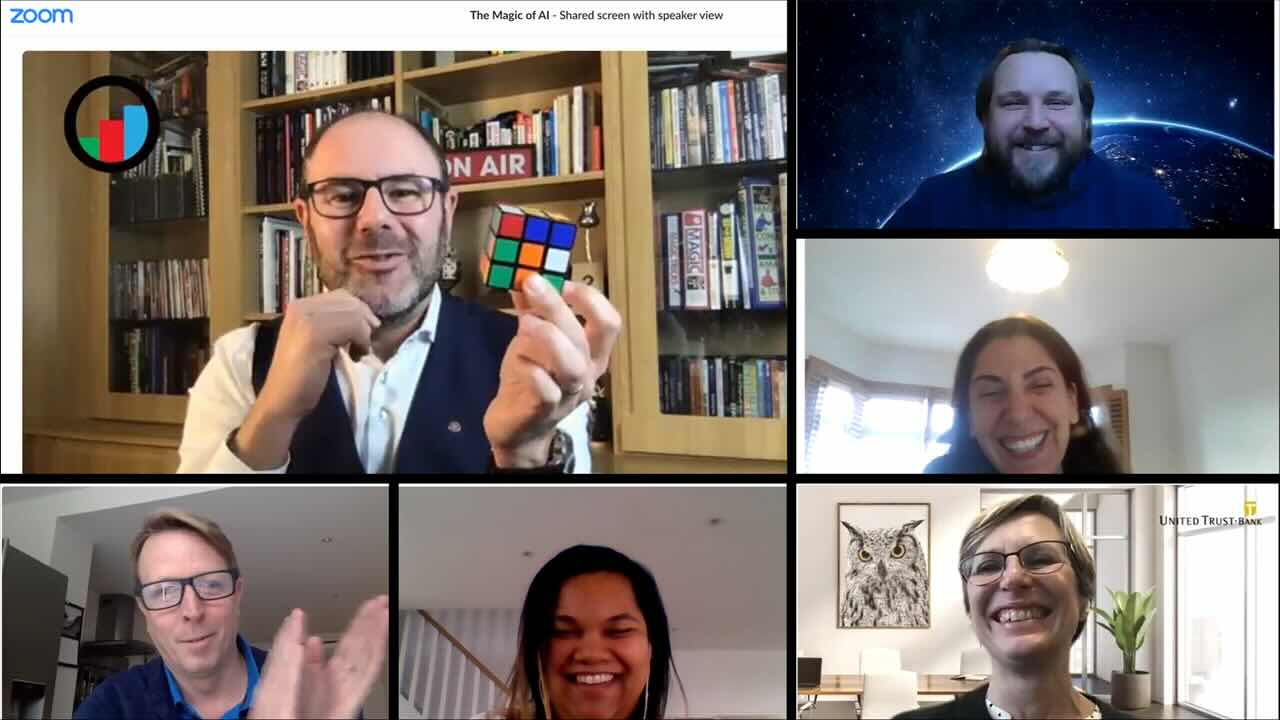
The Magic of AI
Demystifying AI is a challenge facing most businesses as automation and machine learning shift to being a necessity. Read more about the magic of AI here.
Google’s AI Claims to Be Improving How It Recognises News and Misinformation
Google's Vice President, Pandu Nayak claims that Google is using AI to better understand news and misinformation. Read more about Nayak's theory in this guide.
DeepMind AI Explores How to Improve Chess
Deepmind is an AI company using machine learning to reinvent the game of chess as we know it, with the help of chess champion Vladimir Kramnik. Learn more here.
Dani Katz runs 18km as part of Optalitix Fundraising
Optalitix co-founder Dani Katz ran 18km as part of Optalitix’s fundraising efforts this summer. Read about how he did and the charities that Dani ran for here.
Optalitix Joins Google Cloud Partner Advantage Program
Market leaders in AI and machine learning solutions, Optalitix, announced it has joined the Google Cloud Partner Advantage Program as a Sell and Build partner.
AI Breakthrough Could Accelerate Machine Learning Development
Researchers achieved a new AI breakthrough whereby using light for performing computations can improve machine learning neural networks in speed and efficiency.
AI Used on Facebook and Twitter to Detect Foreign ‘Trolls’
Researchers claim to have trained a machine learning system to identify posts on social media that aim to manipulate political events. Read more in this guide.
Next Generation of AI Described as “Too Dangerous to Release” – Now Released
The Artificial intelligence tool Generative Pre-training Transformer (GPT-3) has gained much attention, but is the technology dangerous? Learn more now.

Elon Musk Predicts AI Will Overtake Humans in 5 Years
Elon Musk has recently claimed that Artificial Intelligence could overtake humans by 2025, and discussed these predictions in a New York Times interview.

Optalitix Named Amongst Start-up Elite in the TechRound100
Optalitix is a finalist in the TechRound100, ranking in the top 100 UK start-ups that have been praised for their innovation. Learn about this competition here.
Identifying Unwanted Bias in Machine Learning
With human-made models comes human-biases, machine learning models are inclined to reflect the biases of the team who built it and the data it is fed.
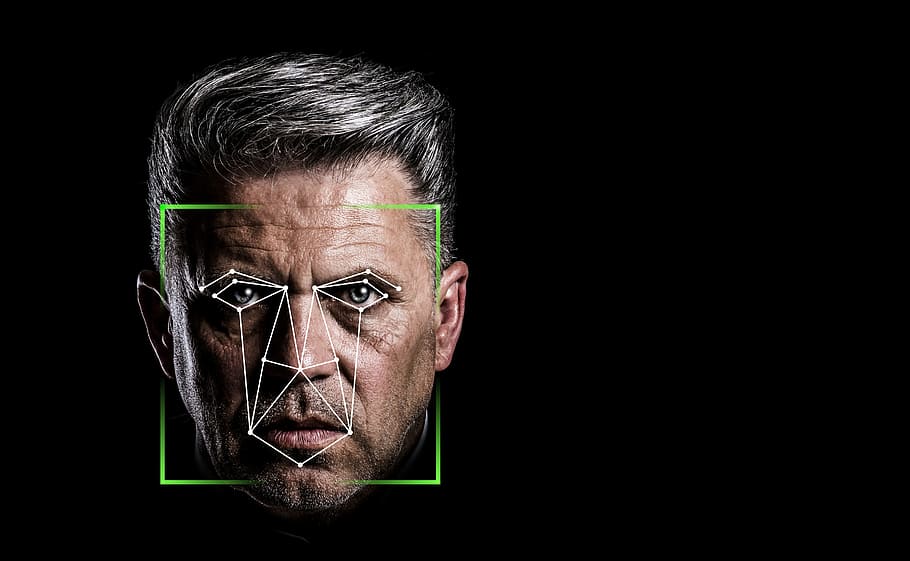
Concerns Rise Over AI Racial Bias as Facial Recognition “Predicts Criminality”
The debate over racial bias in tech has been renewed as a US university claims it can predict criminality through facial recognition. Learn more in this guide..
How Is AI Helping to Fight the Impacts of COVID-19?
AI and machine learning have become key tools in helping to tackle the pandemic, not just in understanding the virus but also how to support different industries.
The Top 5 Strangest Uses of AI
Whilst AI has transformed many essential areas of society, some have also begun to use its technology for the weirder. Take a look at some odd uses of AI here.