
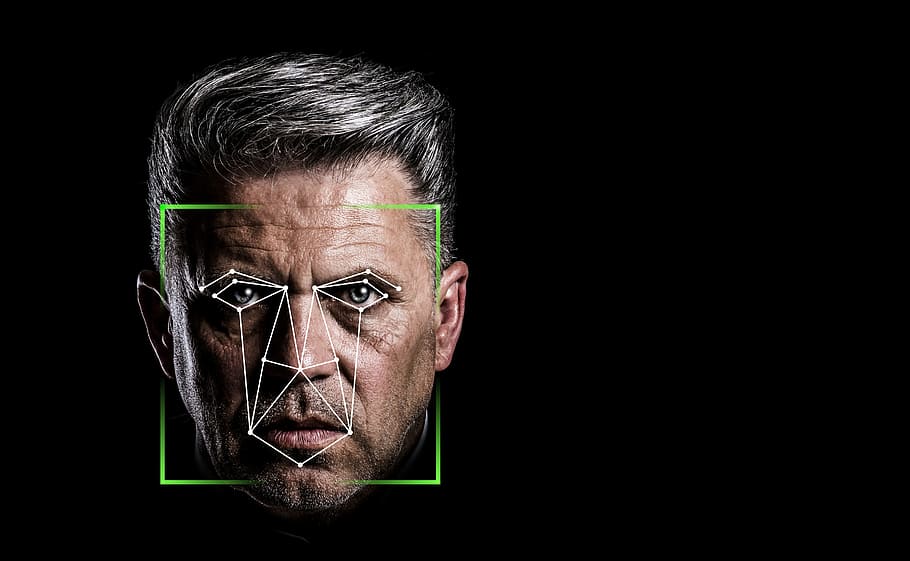
The debate over racial bias in tech has been renewed as a university in America claims it can “predict criminality” through facial recognition.
Researchers at Harrisburg University claim that they can “predict if someone is a criminal based solely on a picture of their face” through software “intended to help law enforcement prevent crime”.
One member from the Harrisburg research team in particular claimed that “Identifying the criminality of [a] person from their facial image will enable a significant advantage for law-enforcement agencies and other intelligence agencies to prevent crime from occurring.”
The university have said that this research would be included in a Springer Nature book, however, Springer have stated that this was “at no time” accepted, claiming that the research “went through a thorough peer preview process. The series editor’s decision to reject the final paper was made on Tuesday 16 June and was officially communicated to the authors on Monday 22 June”
Whilst the Harrisburg researchers claim their technology holds “no racial bias” through its operations, there has still been considerable backlash from this research - 1,700 academics signing an open letter demanding this research stays unpublished.
The Coalition for Critical Technology, and organisers of this open letter, have stated that “Such claims are based on unsound scientific premises, research, and methods, which numerous studies spanning our respective disciplines have debunked over the years.” and that “all publishers must refrain from publishing similar studies in the future”.
The group have raised attention to the distorted data that feeds this perception of what a criminal “looks like”, pointing to a number of studies that suggests harsher treatment for ethnic minorities throughout the criminal justice system.
Computer-science researcher at Cambridge University Krittika D’Silva commented: “It is irresponsible for anyone to think they can predict criminality based solely on a picture of a person’s face.”
“The implications of this are that crime ‘prediction’ software can do serious harm – and it is important that researchers and policymakers take these issues seriously”
D’Silva also points to the number of studies revealing machine-learning to hold various different biases “Numerous studies have shown that machine-learning algorithms, in particular face-recognition software, have racial, gendered, and age biases”
Harrisburg University have decided not to publish this paper on the facial recognition software, stating the news release that outlined the research, titled “A Deep Neural Network Model to Predict Criminality Using Image Processing” has been removed at the involved faculty’s request, and further that publication the research was going to appear in has since decided against this. The university state on their website:
“Academic freedom is a universally acknowledged principle that has contributed to many of the world’s most profound discoveries. This University supports the right and responsibility of university faculty to conduct research and engage in intellectual discourse, including those ideas that can be viewed from different ethical perspectives. All research conducted at the University does not necessarily reflect the views and goals of the University.”

How to get underwriting efficiency. Workflow and the underwriting workbench
Improve underwriting efficiency with Optalitix's workflow and workbench expertise. Our tools handle various processes, quotes, and large underwriting departments.

A practical guide to underwriting workbenches
Explore how our underwriting workbench aids insurers in handling incoming risks, monitoring their risk profile, and aligning management with their risk appetite.
Optalitix celebrates 10 years!
Optalitix products now available on Google Cloud Marketplace
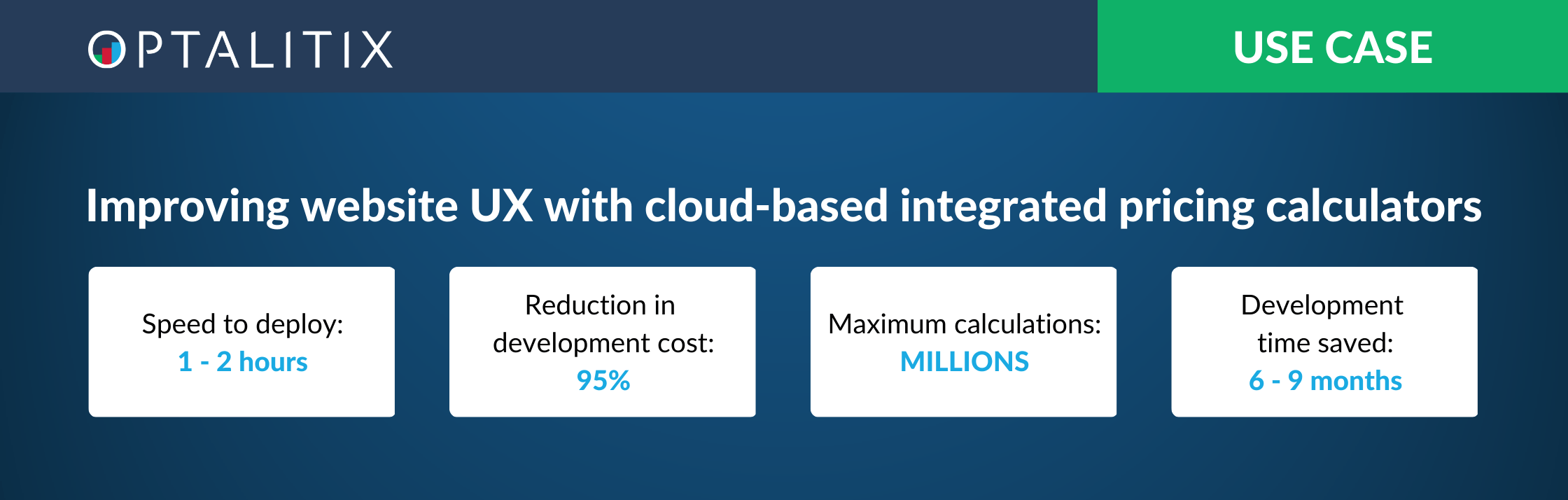
Onespark use case: Improving website UX with cloud-based integrated pricing calculators
Building a pricing calculator into a CRM for Almagro Capital
Almagro wanted a calculator for their products to be built into the Zoho CRM system. Find out how Optalitix Models connected the Almagro CRM system in Zoho here.
Meet Optalitix at Insurtech Insights EU 2023
The Insurech Conference connects insurers and investors, offering an unparalleled experience and access to industry innovators. Explore 2023 Conference insights!
Optalitix appoints Paul Hewitt to their Board following the investment into Optalitix by 24Haymarket
Paul Hewitt has been appointed to the Board of Optalitix, advising on insurance strategy, product development and industry partnerships. Read more in this guide.
.jpeg)
Building a pricing system from a spreadsheet
Have you got an Excel pricing model that you would love to turn into a system? Find out how to build a pricing system from a spreadsheet in our guide.
Optalitix & Avamore launching new lending platform using Optalitix Originate
Optalitix Client Avamore will be launching its new core lending platform using Optalitix Originate architecture. Read more about the platform and its targets.
Optalitix Models integrates easily with Retool to create no-code apps from spreadsheets
Spreadsheet-based calculations representing real-world situations are referred to a models. See how to convert yours into usable application software here.
Optalitix announces that it has achieved the prestigious ISO 27001 certification
OOptalitix announced it has achieved the prestigious ISO 27001 certification by implementing an Information Security Management System (ISMS). Read more here
New pricing standards at Lloyd's require improvements in underwriting systems
New principles for doing business at Lloyd’s will encourage syndicates to digitise their processes, especially underwriting. Find out more here.
Learn about insurance innovation from the DIA conference
The Dia Munich Conference, in 2022, showcased cutting-edge insurance technology, highlighting the growing fusion of insurance and technology in mainland Europe.
Optalitix raises £4m of funding for growth
Optalitix is an award-winning technology business that adds value to financial institutions with low code SaaS products, data analysis and AI models. Read more.