
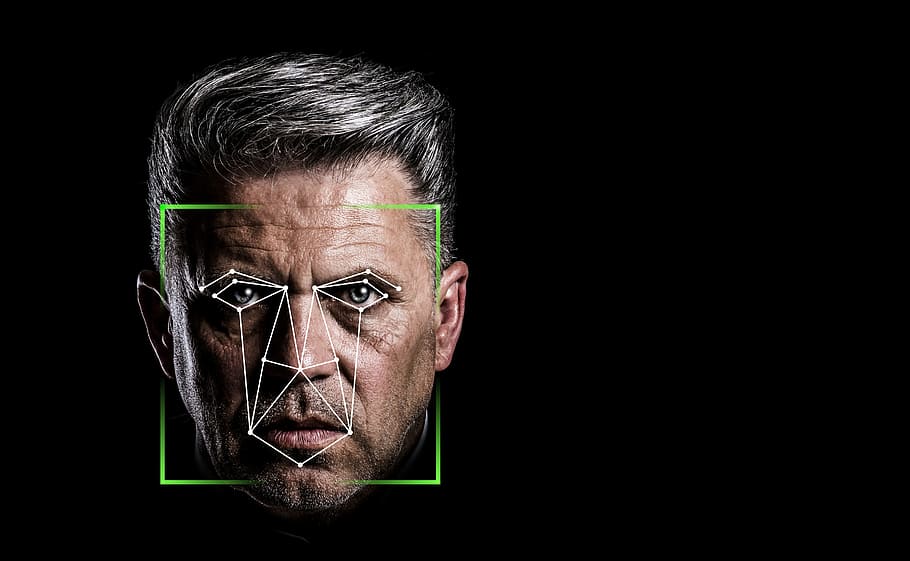
The debate over racial bias in tech has been renewed as a university in America claims it can “predict criminality” through facial recognition.
Researchers at Harrisburg University claim that they can “predict if someone is a criminal based solely on a picture of their face” through software “intended to help law enforcement prevent crime”.
One member from the Harrisburg research team in particular claimed that “Identifying the criminality of [a] person from their facial image will enable a significant advantage for law-enforcement agencies and other intelligence agencies to prevent crime from occurring.”
The university have said that this research would be included in a Springer Nature book, however, Springer have stated that this was “at no time” accepted, claiming that the research “went through a thorough peer preview process. The series editor’s decision to reject the final paper was made on Tuesday 16 June and was officially communicated to the authors on Monday 22 June”
Whilst the Harrisburg researchers claim their technology holds “no racial bias” through its operations, there has still been considerable backlash from this research - 1,700 academics signing an open letter demanding this research stays unpublished.
The Coalition for Critical Technology, and organisers of this open letter, have stated that “Such claims are based on unsound scientific premises, research, and methods, which numerous studies spanning our respective disciplines have debunked over the years.” and that “all publishers must refrain from publishing similar studies in the future”.
The group have raised attention to the distorted data that feeds this perception of what a criminal “looks like”, pointing to a number of studies that suggests harsher treatment for ethnic minorities throughout the criminal justice system.
Computer-science researcher at Cambridge University Krittika D’Silva commented: “It is irresponsible for anyone to think they can predict criminality based solely on a picture of a person’s face.”
“The implications of this are that crime ‘prediction’ software can do serious harm – and it is important that researchers and policymakers take these issues seriously”
D’Silva also points to the number of studies revealing machine-learning to hold various different biases “Numerous studies have shown that machine-learning algorithms, in particular face-recognition software, have racial, gendered, and age biases”
Harrisburg University have decided not to publish this paper on the facial recognition software, stating the news release that outlined the research, titled “A Deep Neural Network Model to Predict Criminality Using Image Processing” has been removed at the involved faculty’s request, and further that publication the research was going to appear in has since decided against this. The university state on their website:
“Academic freedom is a universally acknowledged principle that has contributed to many of the world’s most profound discoveries. This University supports the right and responsibility of university faculty to conduct research and engage in intellectual discourse, including those ideas that can be viewed from different ethical perspectives. All research conducted at the University does not necessarily reflect the views and goals of the University.”

The Optalitix Newsletter: Spring 2025
Explore the latest industry news and events in our Spring Newsletter - your inside track on the fast-evolving insurance landscape.

Transforming Pool Re’s Reinsurance Scheme with Optalitix Quote
Revolutionising Treaty and Claims Management in only 6 Months

Innovate your pricing: 7 key benefits
Discover why leading insurers are choosing Optalitix to streamline underwriting and pricing—faster value, no-code Excel integration, and empowered actuarial teams, all without costly consultants or lengthy rebuilds

Frequency‐Severity Modeling in Commercial Insurance
Transforming complexity into clarity in technical pricing

Optalitix Partners with SortSpoke to Revolutionise Underwriting with AI-Powered Document Processing
AI Integration Automates Data Extraction and Accelerates Quote Generation

Optalitix and Go.Compare to Exhibit at BIBA 2025
Visit Us at Stand F79 – 14–15 May, Manchester

Optalitix and Pool Re Shortlisted for Digital Insurance Innovation of the Year
Recognising Innovation at the British Insurance Awards 2025

The California Wildfires: An industry-defining event
Explore how the California wildfires have become a turning point for the insurance industry. Learn how insurers are adapting through advanced data analytics, risk modelling, and technology.

Meet Optalitix at Insurtech Insights
Join leading experts to gain insight into and improve your knowledge on challenging and strategic issues and stay on top of future trends.

Optalitix partners with CannGen to revolutionise underwriting for a fast-growing industry
A Strategic Alliance to Digitise Pricing Models and Streamline Operations Across North America and Europe
Man vs Machine in the technology arms race
As technology advances, insurers must carefully balance automation through algorithms with the indispensable value of human judgment.

The future of commercial underwriting and how to prepare for it
Why Legacy Pricing Systems Are Holding Insurers Back
.jpeg)
What part will AI play in the future of commercial insurance pricing?
AI is transforming commercial insurance pricing—are you leveraging its full potential?

Tokio Marine HCC International partners with Optalitix to revolutionise pricing and underwriting processes
This partnership will deliver advanced data-driven solutions, improving pricing accuracy, risk insights, and operational efficiency

Healthy capacity brings stable 2025 reinsurance renewals season
Explore how healthy capacity is shaping a stable 2025 reinsurance renewals season. Learn about key trends, market dynamics, and opportunities for insurers in our latest analysi