

Researchers claim to have trained a machine learning system to identify posts on social media that aim to manipulate political events. This has been made possible, researchers claim, through the development of an automated machine learning system that identifies certain posts based around their content.
There are thought to be a rising number of political events targeted by foreign activity via social media networks. Researchers have found that these foreign manipulation campaigns can be identified when looking at the timing, the URLs contained in posts, as well as the length of the these posts.
Princeton University’s Dr Meysam Alizadeh, one of the co-authors on the research, stated in an article by The Guardian “We can use machine learning to automatically identify the content of troll postings and track an online information operation without human intervention”
The research team reports in the journal Science Advances exactly how the work was carried out, using content from four well-known social media campaigns that were targeted to the US. As a comparison, the researchers also used data from American Twitter accounts, including both average users and those engaged in the country’s politics. In addition to this, the research also used posts from accounts on Reddit that weren’t associated to any of these campaigns.
Once the system had been trained, the research then explored whether it could distinguish between normal user activity and trolls. The team found positive results, with posts flagged up by the technology generally being those made by trolls. However, it’s worth noting that whilst the system did identify some of the troll posts, it did not pick up on all of them.

Director of Cardiff University’s Crime and Security Research Institute Prof Martin Innes commented “This is an important, interesting and sometimes intriguing piece of analysis”
“That machine learning algorithms should be able to identify similar content from within bounded datasets is perhaps to be expected, as after all there were already signals in the data that enabled them to be connected. But as the authors quite correctly clarify, there is a gap still to be bridged in terms of applying these approaches ‘in the wild’ to identify ‘live’ operations.”
This approach, the team claim, is different from detecting bots – an important point to note as these social media campaigns very often involve posts made by humans.
In addition to distinguishing between the activity of trolls and that of normal users, the research also found differences in the technology’s ability to detect, dependent on the country – Dr Alizadeh stating the system’s performance was “near-perfect; close to 99% accurate” for Venezuelan campaigns. In addition to this, Chinese activity was claimed to be easier to detect in comparison to that from Russia.
However, whilst the campaigns of some countries were easier to detect than others, Dr Alizadeh notes that this does not mean certain countries are better at disguising themselves as regular US users, and that there are a whole host of other reasons why some are more difficult to spot – “For example, the Venezuelans always talk about politics. The Russian trolls, some of them never talk about politics – they engage in hashtag games or share links to download music. Why are Russian trolls doing that? One answer could be to build their own audience.”
Get rid of the cr…p and do something Cool!
Read the valuable insights offered by Buster Tolfree the Commercial Director – Mortgages at a Tip-Talks event co-sponsored by United Trust Bank and Optalitix.

The Magic of AI
Demystifying AI is a challenge facing most businesses as automation and machine learning shift to being a necessity. Read more about the magic of AI here.
Google’s AI Claims to Be Improving How It Recognises News and Misinformation
Google's Vice President, Pandu Nayak claims that Google is using AI to better understand news and misinformation. Read more about Nayak's theory in this guide.
DeepMind AI Explores How to Improve Chess
Deepmind is an AI company using machine learning to reinvent the game of chess as we know it, with the help of chess champion Vladimir Kramnik. Learn more here.
Dani Katz runs 18km as part of Optalitix Fundraising
Optalitix co-founder Dani Katz ran 18km as part of Optalitix’s fundraising efforts this summer. Read about how he did and the charities that Dani ran for here.
Optalitix Joins Google Cloud Partner Advantage Program
Market leaders in AI and machine learning solutions, Optalitix, announced it has joined the Google Cloud Partner Advantage Program as a Sell and Build partner.
AI Breakthrough Could Accelerate Machine Learning Development
Researchers achieved a new AI breakthrough whereby using light for performing computations can improve machine learning neural networks in speed and efficiency.
AI Used on Facebook and Twitter to Detect Foreign ‘Trolls’
Researchers claim to have trained a machine learning system to identify posts on social media that aim to manipulate political events. Read more in this guide.
Next Generation of AI Described as “Too Dangerous to Release” – Now Released
The Artificial intelligence tool Generative Pre-training Transformer (GPT-3) has gained much attention, but is the technology dangerous? Learn more now.

Elon Musk Predicts AI Will Overtake Humans in 5 Years
Elon Musk has recently claimed that Artificial Intelligence could overtake humans by 2025, and discussed these predictions in a New York Times interview.

Optalitix Named Amongst Start-up Elite in the TechRound100
Optalitix is a finalist in the TechRound100, ranking in the top 100 UK start-ups that have been praised for their innovation. Learn about this competition here.
Identifying Unwanted Bias in Machine Learning
With human-made models comes human-biases, machine learning models are inclined to reflect the biases of the team who built it and the data it is fed.
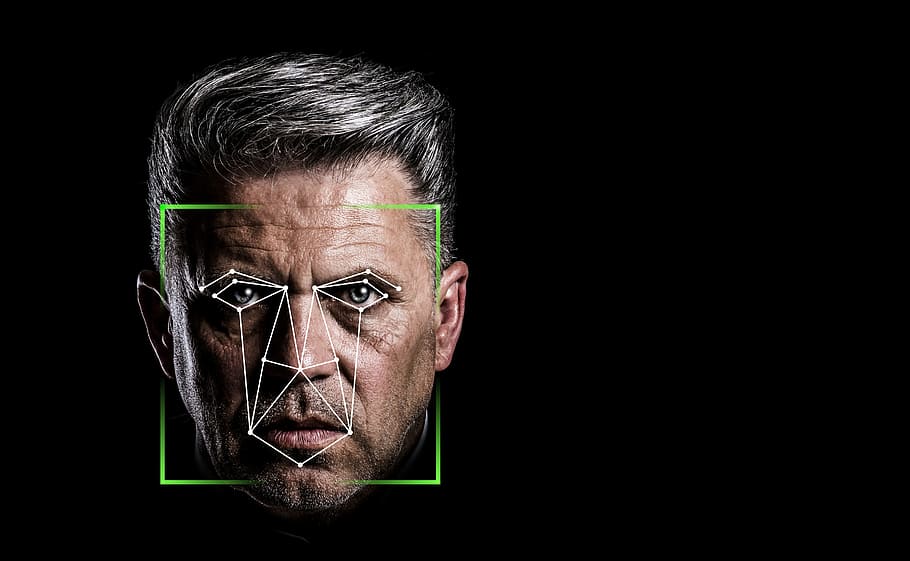
Concerns Rise Over AI Racial Bias as Facial Recognition “Predicts Criminality”
The debate over racial bias in tech has been renewed as a US university claims it can predict criminality through facial recognition. Learn more in this guide..
How Is AI Helping to Fight the Impacts of COVID-19?
AI and machine learning have become key tools in helping to tackle the pandemic, not just in understanding the virus but also how to support different industries.
The Top 5 Strangest Uses of AI
Whilst AI has transformed many essential areas of society, some have also begun to use its technology for the weirder. Take a look at some odd uses of AI here.